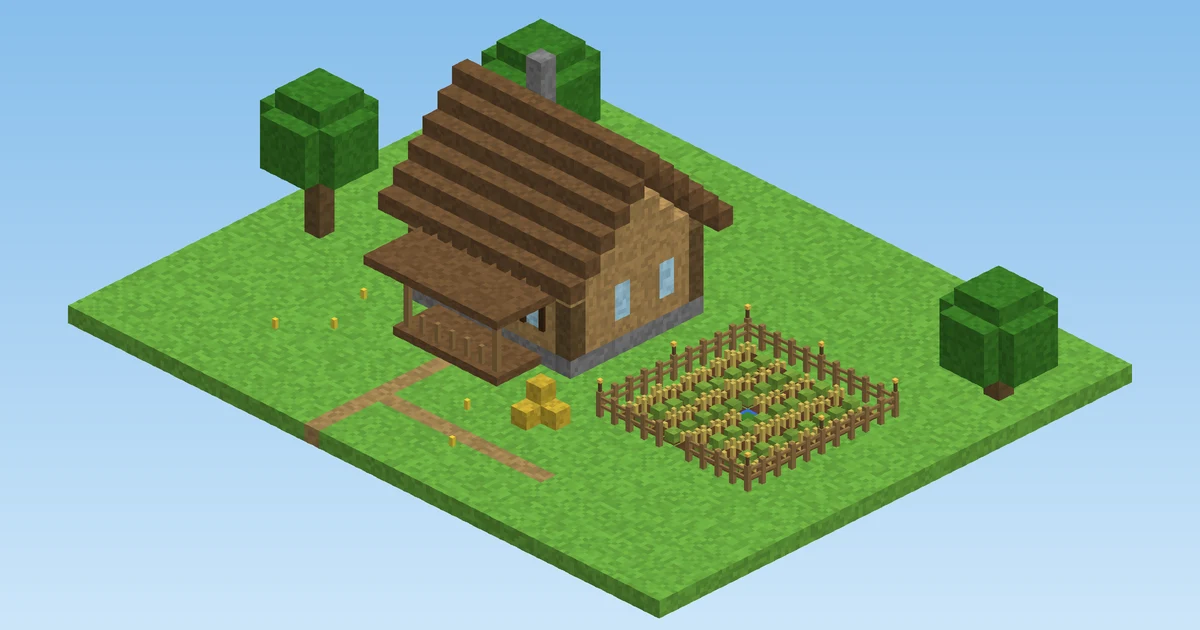
The best Minecraft farmhouse is a simple wooden house on a stone base, with a pitched roof, a front porch, and its crop fields and animal pens built right next door. Start with an 11 by 9 block footprint, wrap a 9×9 farm plot around a single water block, and you’ll have steady food and a good-looking base within your first few in-game days.
Below you’ll find five Minecraft farmhouse designs that hold up in survival, a farm layout that follows the game’s actual growing rules, barn ideas for your animals, and the small detail tricks that turn a plain box into a real country home.
Key Takeaways
- An 11 by 9 block Minecraft farmhouse with a stone foundation and a one-block roof overhang is the easiest design to get right.
- One water block hydrates a 9×9 plot, which gives you 80 farmland blocks per water source.
- Crops need a light level of 9 or higher to grow, so torches keep your farm working at night.
- Fence your fields and pens. Jumping on farmland turns it back into dirt.
- Stick to two or three wood types and add depth with stairs, slabs, and trapdoors.
What Makes a Good Minecraft Farmhouse?
A good Minecraft farmhouse does two jobs. It has to look like a farmhouse, and it has to run like a farm. Most builds nail one and miss the other: a pretty cottage with the wheat field a five-minute walk away, or a perfect crop grid next to a dirt hut.
Here’s what the strongest designs share:
- A raised stone foundation. Cobblestone or stone bricks one block above the ground make the house look planted, not floating.
- Log corner posts. A darker log against lighter planks frames the walls instantly.
- A steep gable roof. Stairs with a one-block overhang read as “farmhouse” from across the valley.
- A covered porch. Even a three-block-deep porch with fence railings adds a ton of character.
- Everything within a short walk. Fields, pens, storage, and your bed should sit close together.
That last point matters more than most players realize. Crops only grow in chunks the game is actively loading around you, so a farm across the map from where you mine and craft barely moves. Build your Minecraft farmhouse close to the spot where you’ll spend most of your time.
5 Minecraft Farmhouse Designs for Survival
These five Minecraft farmhouse designs cover every common biome and skill level. All of them use blocks you can get in survival without rare loot.
| Design | Footprint | Main Blocks | Best Biome | Difficulty |
|---|---|---|---|---|
| Classic Oak Starter | 11 x 9 | Oak planks, oak logs, cobblestone, spruce stairs | Plains, forest | Easy |
| Red Barn-Style | 13 x 11 | Mangrove planks, stripped birch logs, stone bricks, dark oak stairs | Plains, meadow | Medium |
| Modern Farmhouse | 15 x 11 | White concrete, dark oak, deepslate tiles, glass panes | Any | Medium |
| Spruce Cabin | 11 x 11 | Spruce logs, spruce planks, cobblestone, stone brick stairs | Taiga, snowy | Easy |
| Desert Adobe | 13 x 9 | Terracotta, smooth sandstone, acacia logs, mud bricks | Desert, savanna | Medium |
1. Classic Oak Starter Farmhouse
This is the Minecraft farmhouse to build first. Lay an 11 by 9 cobblestone floor, raise oak log posts four blocks tall at each corner, and fill the walls with oak planks. Run a spruce stair roof along the long sides with a one-block overhang, then fill the triangular gable ends with oak planks.
Use two-wide glass pane windows with spruce trapdoors on each side as shutters. Plan on roughly 90 to 100 oak logs for the walls, roof, and porch. That sounds like a lot, but two or three trips to a decent forest covers it.
2. Red Barn-Style Farmhouse
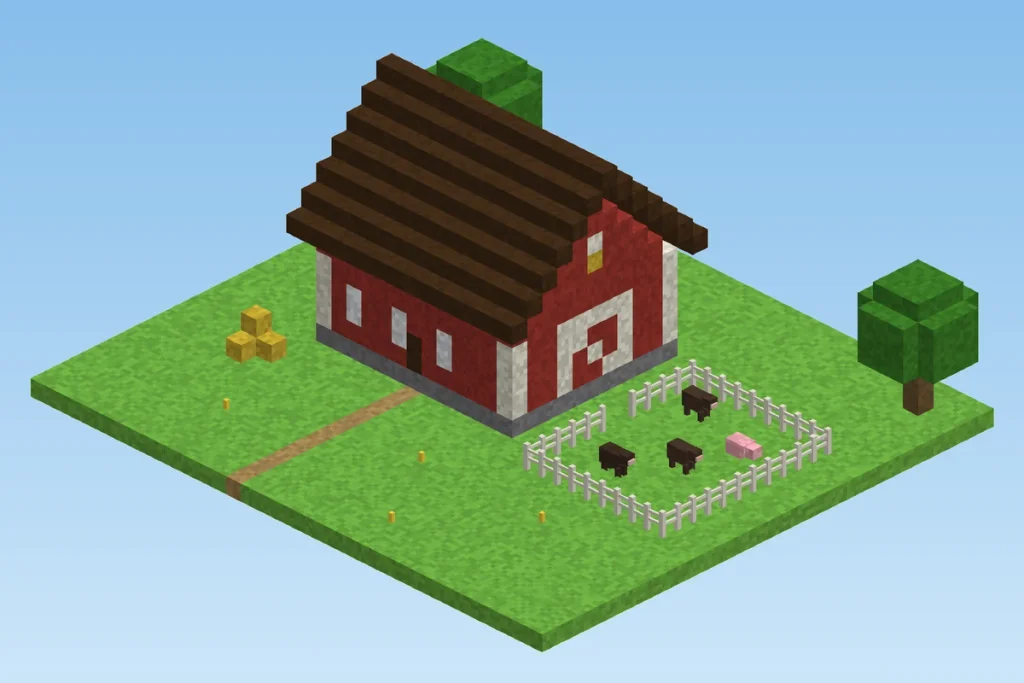
This Minecraft farmhouse has the American country look everyone recognizes. Mangrove planks give you the reddest wood in the game, and stripped birch logs make clean white trim around the corners, doors, and windows. Top it with a gambrel roof (a steep lower slope and a shallower upper slope on each side) in dark oak stairs.
The neat part: you can make the house and barn one building. Put your bedroom and kitchen at one end, animal stalls at the other, and a hay loft upstairs. If you’d rather use red wool or red concrete, skip the wool. It burns.
3. Modern Farmhouse
A modern Minecraft farmhouse means white siding, black trim, and big windows. Use white concrete for the walls, dark oak or blackstone for trim, and deepslate tiles for a dark, crisp roof. Fake board-and-batten siding by setting a column of stripped birch logs every third block in the wall.
Large glass pane windows and lanterns hanging over a wide porch finish the look. Concrete takes some prep (sand, gravel, and white dye from bone meal), so this design works best once your farm is already producing.
4. Spruce Cabin Farmhouse
Spruce makes a perfect Minecraft farmhouse for cold biomes. Lay spruce logs sideways to get that stacked log-cabin look, add a cobblestone chimney, and make the roof steep so it reads well against snow. Stone brick stairs work nicely on the foundation edge.
One cold-weather tip: open water can freeze in snowy biomes, which kills your farm’s hydration. Keep a torch or lantern right next to every water block in your fields.
5. Desert Adobe Farmhouse
For a desert Minecraft farmhouse, use plain terracotta and mud bricks for warm, earthy walls, smooth sandstone for the base, and a flat roof with a slab railing. Acacia logs poking out of the walls just below the roofline look like the wooden beams on a Southwest adobe home.
Deserts never get rain, so your crops depend entirely on placed water. Bring a few buckets, or better, build a small two-by-two pond and you’ll have an infinite water source on site.
Minecraft Farm Layout: Plan the Whole Homestead
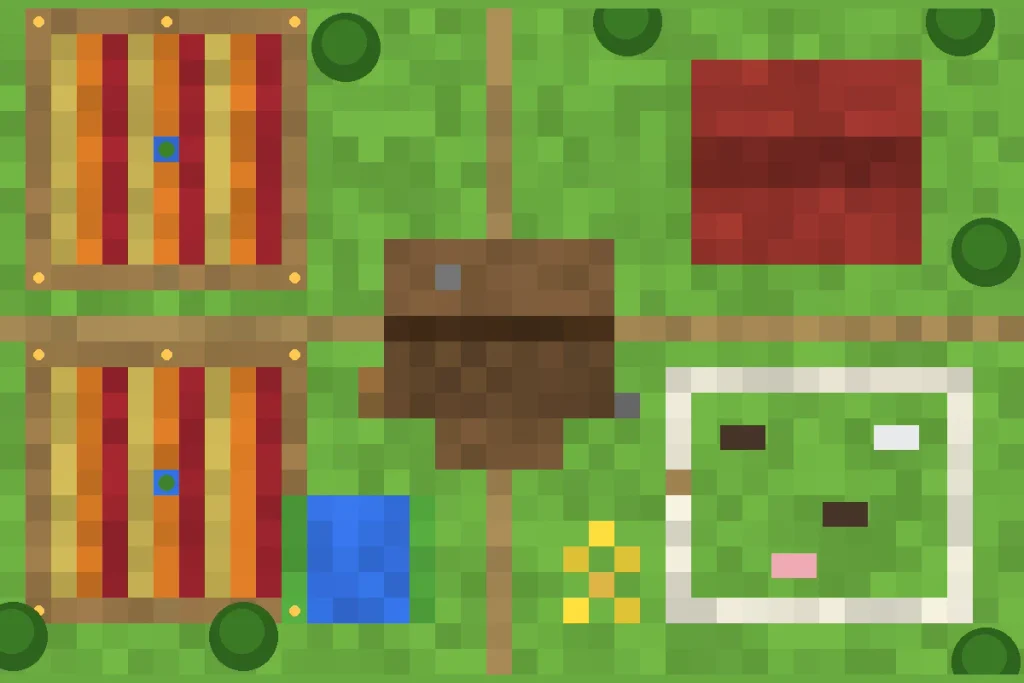
Before you place a single plank of your Minecraft farmhouse, sketch out zones. A good Minecraft farm layout puts the farmhouse in the middle, crops on one side, animal pens on the other, and paths connecting all of it. You’ll walk these routes hundreds of times, so keep them short.
- Crop fields: 9×9 modules with a one-block path between each.
- Animal pens: behind or beside the barn, one pen per species.
- Work area: composter, barrels, smoker, and crafting table near the front door.
- Extras: a pond for sugar cane, a beehive near flowers, and a small tree farm for wood.
The 9×9 Crop Plot Rule
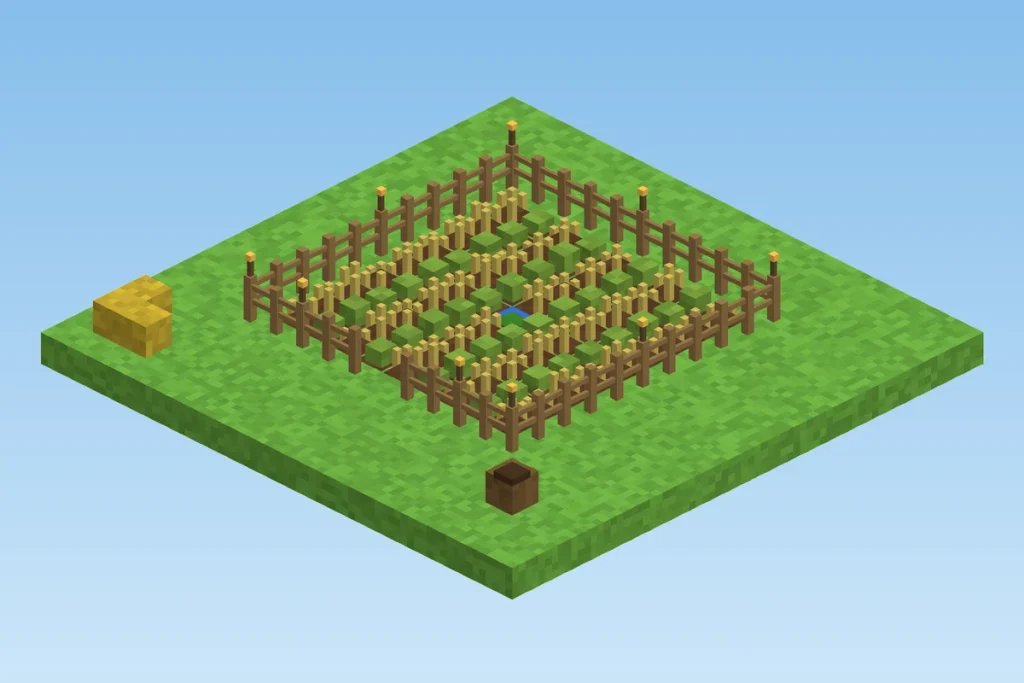
Farmland stays hydrated when water is within four blocks horizontally, on the same level or one block above, according to the Minecraft Wiki’s farmland page. That’s why one water block in the center of a 9×9 square hydrates all 80 surrounding blocks.
Crops also need a light level of 9 or higher to grow. Put torches on fence posts around the edges and your wheat, carrots, and potatoes keep growing all night. A lily pad on the center water block stops you from stepping into it while harvesting.
Melons and pumpkins need an empty dirt, grass, or farmland block beside each stem for the fruit to appear, so plant them in rows with gaps. Sugar cane has to sit directly next to water, which makes the edge of your pond the perfect spot.
Minecraft Barn Ideas for Your Farmhouse Animals
A barn turns your Minecraft farmhouse into a full homestead. Give each animal type its own pen of at least 5 by 5 blocks so they don’t pile into one corner, and keep the barn close enough to the house that you can check on it quickly.
Here’s what each farm animal needs to breed. The full rules are on the Minecraft Wiki breeding guide.
| Animal | Breeding Food | What You Get |
|---|---|---|
| Cows | Wheat | Beef, leather, milk |
| Sheep | Wheat | Wool, mutton |
| Pigs | Carrots, potatoes, or beetroot | Porkchops |
| Chickens | Seeds (wheat, beetroot, melon, pumpkin) | Eggs, feathers, chicken |
| Horses | Golden apples or golden carrots | Transportation |
A few barn tricks worth knowing:
- Carpet on a fence: place a carpet on top of a fence post and you can jump over it, but animals can’t.
- Hay bale loft: each hay bale uses nine wheat, looks great stacked in a loft, and cuts fall damage by 80% if you land on it.
- Leads and food: hold an animal’s breeding food and it will follow you home. Leads work for longer trips.
- Lightning rod: three copper ingots make one, and it pulls nearby lightning strikes away from your wooden roof.
How to Build a Farmhouse in Minecraft, Step by Step
Here’s the order that saves the most time and materials when you build a Minecraft farmhouse in survival:
- Pick a flat spot near water and close to where you mine. Mark the footprint with dirt blocks.
- Lay the foundation in cobblestone or stone bricks, one block above the ground.
- Raise the corner posts with logs, four or five blocks tall.
- Fill the walls with planks, leaving two-wide, two-tall gaps for windows and the door.
- Build the roof with stairs stepping up from both long sides toward the center, with a one-block overhang. Finish the ridge with slabs.
- Add the porch using a slab floor, fence railings, and a small roof extension.
- Detail the outside with trapdoor shutters, window flower boxes, and lanterns.
- Build the first 9×9 plot with fencing and torches, then plant everything you have.
- Light the inside so no mobs spawn while you’re away.
If you’re brand new to the game, our Minecraft for beginners guide covers gathering wood, crafting tools, and surviving your first night before you start building.
Building Tips That Make Your Minecraft Farmhouse Look Real
The difference between an average Minecraft farmhouse and a great one is usually depth. Flat walls look flat. These tips fix that without much extra work:
- Push the frame out. Set your corner logs and roof beams one block out from the wall, or set windows one block in.
- Limit your palette. Two or three wood types plus one stone type looks intentional. Six looks messy.
- Use upside-down stairs under the roof edge to fake thick eaves.
- Make window boxes by placing trapdoors on the wall below a window and filling the space with leaves or flowers.
- Make paths with a shovel on grass (dirt path), then mix in coarse dirt and gravel so it doesn’t look stamped.
- Put a campfire on the chimney. Place a hay bale under it and the smoke rises much higher.
- Build a scarecrow from a fence post, a hay bale, and a carved pumpkin. It’s pure decoration, but it sells the scene.
Inside, a smoker cooks food twice as fast as a furnace, barrels stack neatly against walls, and a composter turns extra seeds into bone meal. For more room-by-room inspiration, check out our easy Minecraft starter house designs.
Common Minecraft Farmhouse Mistakes to Avoid
- Building too far away. Unloaded chunks don’t grow crops.
- Leaving fields dark. Crops stall at night, and hostile mobs spawn in the shadows.
- Skipping fences. Mobs and players trample farmland back into dirt.
- Using wool near fire. Wool and wood both burn, so keep lava and campfires away from them.
- Making the roof too flat. A low roof makes any Minecraft farmhouse look like a shoebox.
Want villagers working your fields for you? Our guide on how to get villagers to breed in Minecraft shows how to grow a village right around your farm.
Frequently Asked Questions
What is the best wood for a Minecraft farmhouse?
Oak and spruce are the best woods for a Minecraft farmhouse because they’re common and look classic together. Use spruce logs for posts and roof stairs, and oak planks for walls. For a red barn look, try mangrove planks with stripped birch trim. Stick to two or three wood types so the build looks clean.
How big should a Minecraft farmhouse be?
A good starter Minecraft farmhouse is about 11 by 9 blocks with walls four or five blocks tall. That fits a bed, storage, crafting area, and a small kitchen. Larger builds of 13 by 11 or 15 by 11 blocks leave room for a second floor or an attached barn once you have more materials.
How do you make crops grow faster in Minecraft?
Plant crops on hydrated farmland within four blocks of water and keep the light level at 9 or higher with torches. Stay nearby, since crops only grow in loaded chunks. Use bone meal for an instant boost, and in Java Edition, alternate rows of different crops instead of planting one big block of the same crop.
Can villagers farm for you in Minecraft?
Yes. Farmer villagers plant and harvest wheat, carrots, potatoes, and beetroot on nearby farmland. A villager becomes a farmer by claiming a composter as a job site block. Place a composter near your fields, give them seeds or crops to start, and they’ll keep the plot replanted while you’re out mining.
How do you keep mobs out of your Minecraft farm?
Light the whole area with torches or lanterns, and surround your fields and pens with fences. Hostile mobs spawn in darkness, and fences are too tall for most mobs to jump (spiders can still climb). Use fence gates for entrances and close them behind you. A wall of cobblestone works too but blocks your view of the farm.
Do Minecraft farmhouse designs work on both Java and Bedrock?
Yes. Every block used in these designs exists in both Java Edition and Bedrock Edition, so you can build them on PC, Xbox, PlayStation, Nintendo Switch, or mobile. A few farming rules differ slightly between editions, so check the official Minecraft site or the Minecraft Wiki if a farm behaves differently.
Your Next Step: Start With the Plot, Then the House
Here’s the smartest order for a new world: dig your first 9×9 crop plot, plant everything you have, and then build the house while the wheat grows. By the time your roof is on, you’ll have your first harvest. Pick one of the five Minecraft farmhouse designs above that fits your biome, gather around 100 logs, and start with the foundation tonight. You can grab the latest version of the game from the official Minecraft website.