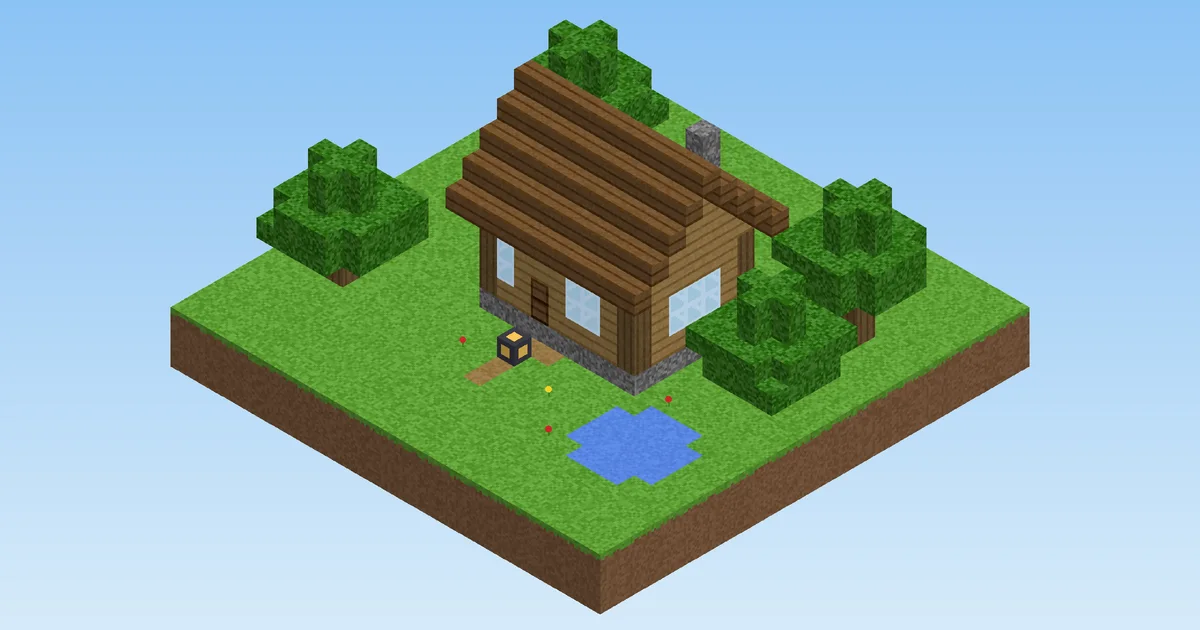
The best Minecraft starter house is small, built from wood you can gather in a few minutes, and lit so nothing spawns inside. If you only want one plan, build the 7×7 oak cabin below. If the sun is already setting, dig into a hillside instead and upgrade tomorrow.
Below are six easy Minecraft starter house designs with sizes, rough block counts, and the small fixes that keep creepers and spiders away from your bed. Every Minecraft starter house here works the same way in Java and Bedrock.
Key Takeaways
- A good Minecraft starter house needs four things: a bed, a crafting table, a chest, and light.
- The 7×7 oak cabin is the best all-around pick and takes about 70 logs with a stair roof.
- In current versions, hostile mobs only spawn at block light level 0, so one torch keeps a small room safe.
- A one-block roof overhang stops spiders from climbing onto your roof.
- Build small first. A simple Minecraft house is easy to expand once you have stone and iron.
What Makes a Good Minecraft Starter House?
Your first night in survival lasts about 7 minutes of real time, and daylight gives you roughly 10 minutes to prepare. That’s not much. So a Minecraft starter house should be quick to put up, cheap to build, and easy to defend.
Here’s the checklist I use for every Minecraft house for beginners:
- Fast: you can finish the shell before your first sunset.
- Cheap: wood, dirt, or cobblestone only. No iron, no glass required.
- Useful: room for a bed, a crafting table, a furnace, and two chests.
- Safe: fully lit inside, with a door you can close behind you.
- Expandable: plain walls you can extend later without tearing everything down.
Materials You Need for a Minecraft Starter House
Punch a few trees before you place a single block. One log turns into 4 planks, and planks become almost everything a Minecraft survival house needs.
| Item | Recipe | Why You Need It |
|---|---|---|
| Crafting table | 4 planks | Opens up every other recipe |
| Bed | 3 wool + 3 planks | Skips the night and sets your spawn point |
| Chest | 8 planks | Stores your loot so you don’t lose it on death |
| Wooden door | 6 planks (makes 3 doors) | Keeps zombies outside |
| Torches | 1 coal or charcoal + 1 stick (makes 4) | Stops mobs from spawning indoors |
| Furnace | 8 cobblestone | Cooks food and makes charcoal and glass |
No coal yet? Smelt a log in a furnace to get charcoal. It works exactly like coal for torches.
6 Easy Minecraft Starter House Designs
Each Minecraft starter house below is listed from fastest to most comfortable. Pick the one that matches how much daylight you have left.
1. The 5×5 Emergency Hut
This is the “I spawned late and I hear zombies” Minecraft starter house. Mark a 5×5 square, stack walls 3 blocks high, leave a 2-block gap for a door, and cap it with a flat roof. It takes about 70 blocks, and dirt is fine because it’s free and quick to dig.
Inside, you get a 3×3 floor. That’s just enough for a bed, a crafting table, and one chest. Place one torch and you’re done. Swap the dirt for planks the next morning. Dirt costs nothing, but it’s ugly to live in.
2. The 7×7 Oak and Cobblestone Cabin (Best Overall)
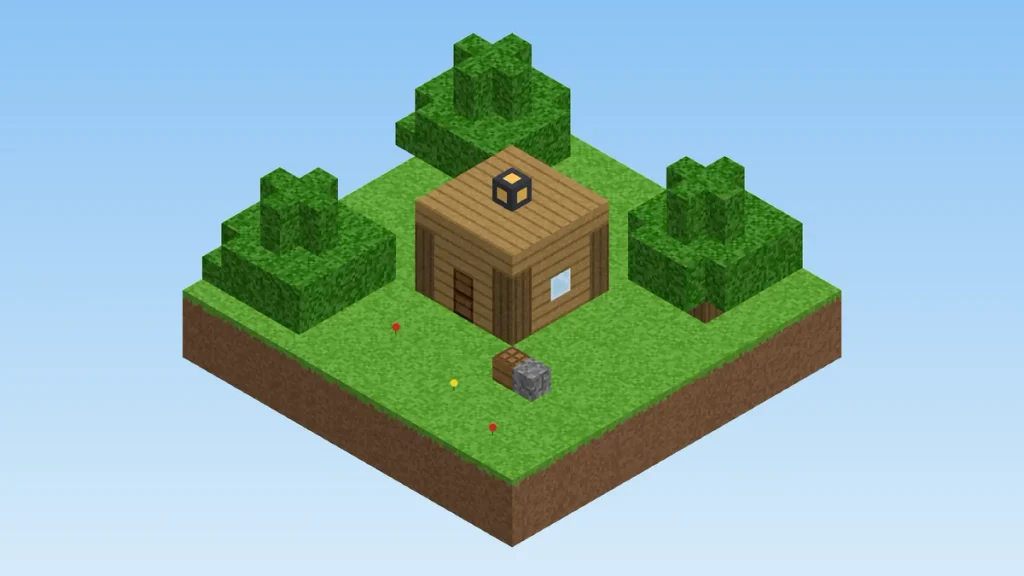
This is the small Minecraft house I recommend to almost everyone as a first Minecraft starter house. Use oak logs for the four corner posts, oak planks for the walls, and a ring of cobblestone at the base. Walls go 4 blocks high, which gives the interior a roomy feel without much extra wood.
For the roof, run oak or spruce stairs from each long side up to a ridge, with one block of overhang all around. The full build takes about 70 logs (16 for corner posts, the rest turned into planks and stairs). That’s a dozen or so oak trees. Too much for day one? Use a flat slab roof instead. A 7×7 slab roof needs only 49 slabs, which is about 25 planks.
- Footprint: 7×7 outside, 5×5 inside
- Interior fits: bed, crafting table, furnace, 2 chests, and a smoker later
- Windows: leave gaps now, fill with glass once you smelt sand
3. The Hillside Bunker
Find a hill or a small cliff, then dig a tunnel 3 blocks wide and 3 tall, about 5 blocks deep. Widen the back into a room. Wall off the front with planks or cobblestone, add a door, and you’ve got a shelter that costs almost nothing. You’ll even collect cobblestone while you dig.
The catch with this Minecraft starter house is caves. If you break into a dark gap, block it off right away and add a torch. I like this design for players who spawn in hilly biomes, since you can turn the bunker into a mine entrance later.
4. The Spruce A-Frame
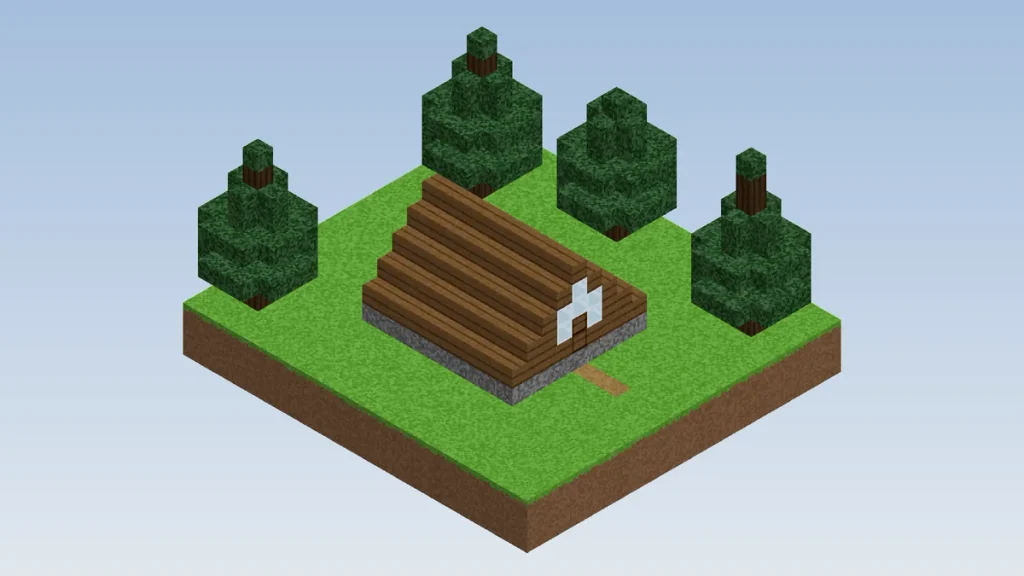
An A-frame Minecraft starter house skips walls entirely. The roof starts at ground level and steps up to a peak, so it uses fewer blocks than a box house of the same size. It looks great in taiga and snowy biomes, where spruce trees are everywhere.
Build a cobblestone floor about 9 long and 9 wide, then stack spruce planks or stairs inward one block per layer until the two sides meet. Fill the front triangle with planks, a door, and a column of glass. Fair warning: the sloped sides cut into your floor space, so keep storage along the center.
5. The Two-Story Birch Cottage
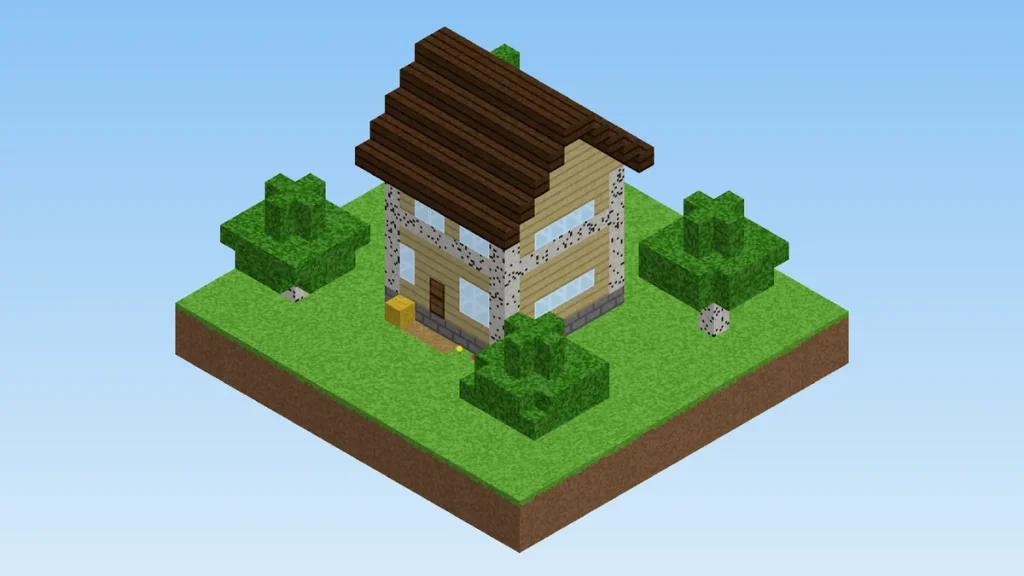
If you plan to stay in one spot for a while, build your Minecraft starter house up instead of out. Put a stone brick (or cobblestone) base down, frame a 7×7 or 8×8 box with birch logs, and fill the walls with birch planks. The ground floor holds crafting, furnaces, and chests. The second floor is your bedroom.
Use a ladder to connect the floors (7 sticks make 3 ladders). Birch is pale, so a dark oak roof gives it a nice contrast. This Minecraft survival house takes more wood than the cabin, so build it on day two or three.
6. The Cobblestone Starter Tower
A 5×5 cobblestone tower, 3 floors tall, is a sneaky-good Minecraft starter house option. Cobblestone has a blast resistance of 6, double that of planks, so a creeper does less damage to your walls. You also get a lookout on top to spot villages, water, and other biomes.
Stack ladders on one inside wall and use slabs between floors. It’s cramped, but it’s the toughest Minecraft starter house on this list.
How to Make Your Minecraft Starter House Mob-Proof
A Minecraft starter house that spawns zombies in the corner is still a bad house. These fixes take a few minutes and solve most problems.
- Light every room. Since the 1.18 update, hostile mobs in the Overworld only spawn on blocks with a block light level of 0. A torch gives off light level 14, so one torch covers a 5×5 room easily. The Minecraft Wiki spawn-proofing guide explains the rules in detail.
- Light the yard too. Put torches on the outside walls and along your path, so mobs don’t spawn right at your door.
- Add a roof overhang. Spiders climb walls, but a one-block overhang stops them from reaching the roof.
- Watch your door on Hard. Zombies can break wooden doors on Hard difficulty. Upgrade to an iron door with a button once you find iron.
- Clear space around your bed. You can’t sleep with hostile mobs close by, so a lit, fenced yard makes nights easier.
Where to Build Your First Minecraft Starter House
Location matters as much as design for any Minecraft starter house. A flat spot near trees, water, and a few passive animals is ideal. If you see a village, build next to it. Villages have beds, crops, and villagers you can trade with or breed later.
Avoid building on top of a dark ravine or deep cave, since mobs can spawn under your floor. Write down your coordinates before you leave home. On Java, press F3. On Bedrock, turn on Show Coordinates in your world settings. You’ll thank yourself after your first long mining trip.
Simple Ways to Upgrade Your Minecraft Starter House Later
Once you have stone tools and some iron, your Minecraft starter house can grow with you. Small touches make a big difference.
- Replace dirt or plain planks with stripped logs and stone bricks.
- Set windows one block deeper than the wall for a sense of depth.
- Swap torches for lanterns, which give light level 15 and look cleaner.
- Add a fenced farm plot by the door for wheat, carrots, and potatoes.
- Build a second room for storage instead of cramming chests into the bedroom.
Get the basics right first. Our Minecraft for beginners guide covers tools, food, and the first few days in more detail.
Pick One Design and Build It Tonight
Don’t overthink your first Minecraft starter house. Start with the 5×5 hut or the hillside bunker if night is close, then move into the 7×7 cabin once you have a stack of logs. A Minecraft starter house only has to keep you alive and organized until you’re ready for something bigger.
Next, read our guide on how to survive your first night in Minecraft, then head underground with our walkthrough on how to find diamonds in Minecraft. For game editions and official news, visit the official Minecraft website.
Frequently Asked Questions
What is the easiest house to build in Minecraft?
The easiest Minecraft starter house is a 5×5 box with walls 3 blocks high, a flat roof, and a door. It takes about 70 blocks, and you can use dirt or planks. Put a bed, a crafting table, and a torch inside, and you have a safe shelter for your first night in just a few minutes.
How big should a Minecraft starter house be?
A 7×7 outside footprint with a 5×5 interior is the sweet spot for most players. It fits a bed, a crafting table, a furnace, and two chests without wasting wood. Anything bigger takes too long on day one. You can always add rooms later once you have stone and iron tools.
What is the best block for a starter house in Minecraft?
Wood planks are the best all-around choice because trees are everywhere and planks are fast to place. Cobblestone is a strong second option since it resists creeper explosions better than wood. Many players mix both: cobblestone for the base and planks or logs for the walls, which looks good and holds up.
How do you keep mobs out of your house in Minecraft?
Light every room with torches, since hostile mobs only spawn at block light level 0 in current versions. Close the door behind you, add a one-block roof overhang to stop spiders, and place torches around the outside. On Hard difficulty, swap your wooden door for an iron door, because zombies can break wooden ones.
Can you build a house in one Minecraft day?
Yes. A full Minecraft day lasts 20 real minutes, with about 10 minutes of daylight. That’s enough time to gather wood, craft basic tools, and build a 5×5 hut or a 7×7 cabin with a flat roof. A stair roof or a two-story design usually takes a second day.
Do these house designs work in both Java and Bedrock?
Yes. Every Minecraft starter house design here uses blocks found in both Minecraft Java Edition and Bedrock Edition, and the crafting recipes match. The only small difference is how you check coordinates: press F3 on Java, or turn on Show Coordinates in world settings on Bedrock. Lighting rules for mob spawning also work the same in both.