The routing number on a check is the nine-digit number printed in the bottom-left corner, between two small symbols that look like this: ⑆. Your account number comes right after it, and the check number comes last. That’s it. You can copy the routing number straight from the check for direct deposit, tax refunds, or bill payments.
Still not sure which number is which? This guide walks through every number on a check and shows you how to double-check your routing number. You’ll also learn how to find it when you don’t have a checkbook.
Key Takeaways
- Bottom left, nine digits. The routing number is always exactly nine digits and appears first on most personal checks.
- Order matters. Most personal checks show the routing number, then the account number, then the check number.
- Location can change it. Large banks often assign routing numbers based on the state where you opened your account.
- Wires can differ. Some banks use a separate routing number for wire transfers.
- No checkbook needed. Your bank’s app, statement, or website will show the same number.
Where Is the Routing Number on a Check?
Look at the row of numbers along the bottom edge of your check. This is called the MICR line (short for magnetic ink character recognition). It’s printed in special magnetic ink so bank machines can read it automatically.
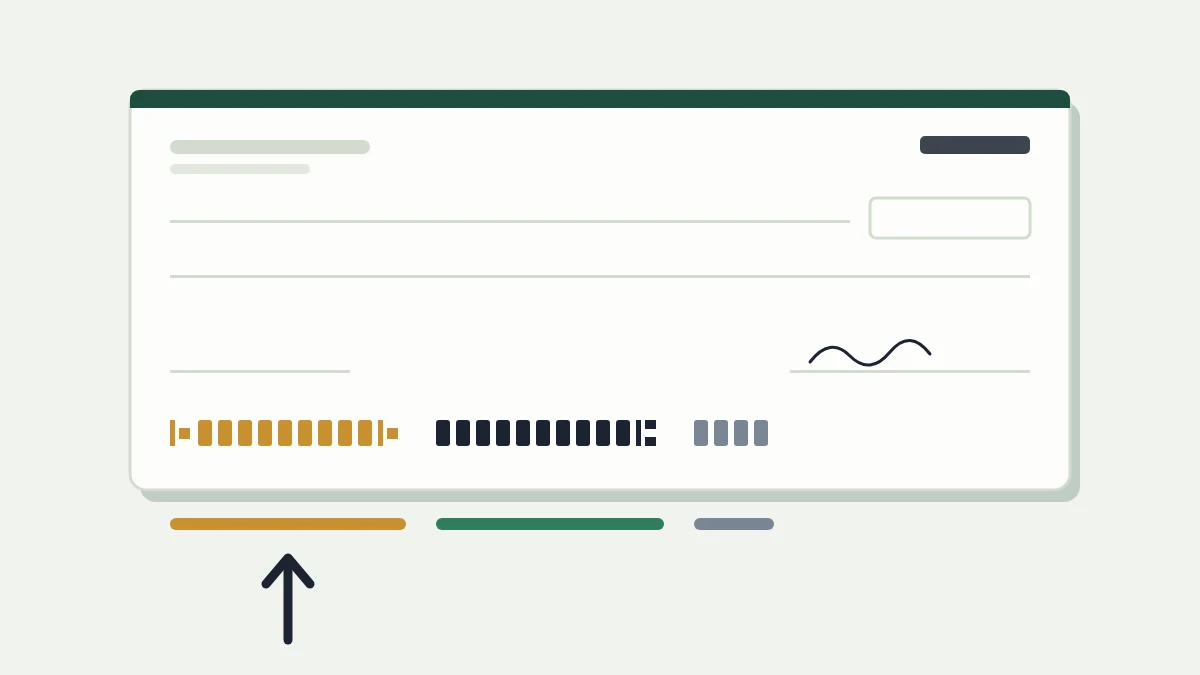
On a standard personal check, the numbers appear in this order:
| Position | What It Is | Length | How to Recognize It |
|---|---|---|---|
| Left | Routing number | Always 9 digits | Sits between two ⑆ symbols |
| Middle | Account number | Usually 8 to 12 digits (up to 17) | Usually followed by a ⑈ symbol |
| Right | Check number | Usually 3 to 4 digits | Matches the number in the top-right corner |
What the Symbols on the Bottom of a Check Mean
The odd-looking symbols aren’t decoration. The ⑆ symbol is the transit symbol, and it brackets the routing number on both sides. The ⑈ symbol is the “on-us” symbol, which marks your account information. If you can spot the two transit symbols, you’ve found your routing number.
Business Checks Use a Different Layout
Business checks are wider, and the check number often appears first, on the far left. Don’t assume the first number is the routing number on these. Look for the nine-digit number between the two ⑆ symbols instead.
Routing Number vs. Account Number: How to Tell Them Apart
The routing number identifies your bank. The account number identifies you. Many customers at the same bank share one routing number, but your account number belongs only to your account.
Here are three quick ways to confirm you’re reading the right one:
- Count the digits. Routing numbers are always exactly nine digits. If you count 10 or more, you’re probably looking at the account number.
- Find the check number first. Match the number in the top-right corner to the bottom row. Rule that one out, and the remaining two numbers are easier to sort out.
- Compare two checks. The routing and account numbers stay the same on every check from the same account. Only the check number changes.
The Check-Digit Test (for the Curious)
Routing numbers have a built-in error check. Multiply the 1st, 4th, and 7th digits by 3, the 2nd, 5th, and 8th digits by 7, and the 3rd, 6th, and 9th digits by 1. Add everything up. For a valid routing number, the total ends in zero.
Take 021000021, a JPMorgan Chase routing number used for New York accounts. Three times (0+0+0) is 0, seven times (2+0+2) is 28, and (1+0+1) is 2. The total is 30, which ends in zero, so the number is valid. This test won’t prove a number belongs to your bank, but it will catch typos.
The first two digits also tell you something. Numbers starting with 01 through 12 point to one of the 12 Federal Reserve districts. Credit unions and savings institutions often start with 21 through 32.
What About the Numbers at the Top of the Check?
The number in the top-right corner is your check number. Many checks also print a small fraction near it, something like 12-3456/7890. That’s the fractional routing number, an older format that banks once used to process checks by hand.
Don’t enter the fraction on a direct deposit form. Always use the nine-digit number from the bottom of the check.
How to Find Your Routing Number Without a Check
Plenty of Americans haven’t ordered checks in years, and that’s fine. You can find your routing number in other places:
- Your bank’s app or website. Log in and open your account details. Most banks show both the routing and full account number, sometimes after you tap “show.”
- Your bank statement. Many banks print the routing number on paper and PDF statements.
- Your bank’s public website. Search “[your bank name] routing number.” Large banks list them by state.
- The ABA lookup tool. The American Bankers Association runs a free routing number lookup with a limited number of searches.
- A phone call or branch visit. A banker can confirm the right number for your specific account in a minute.
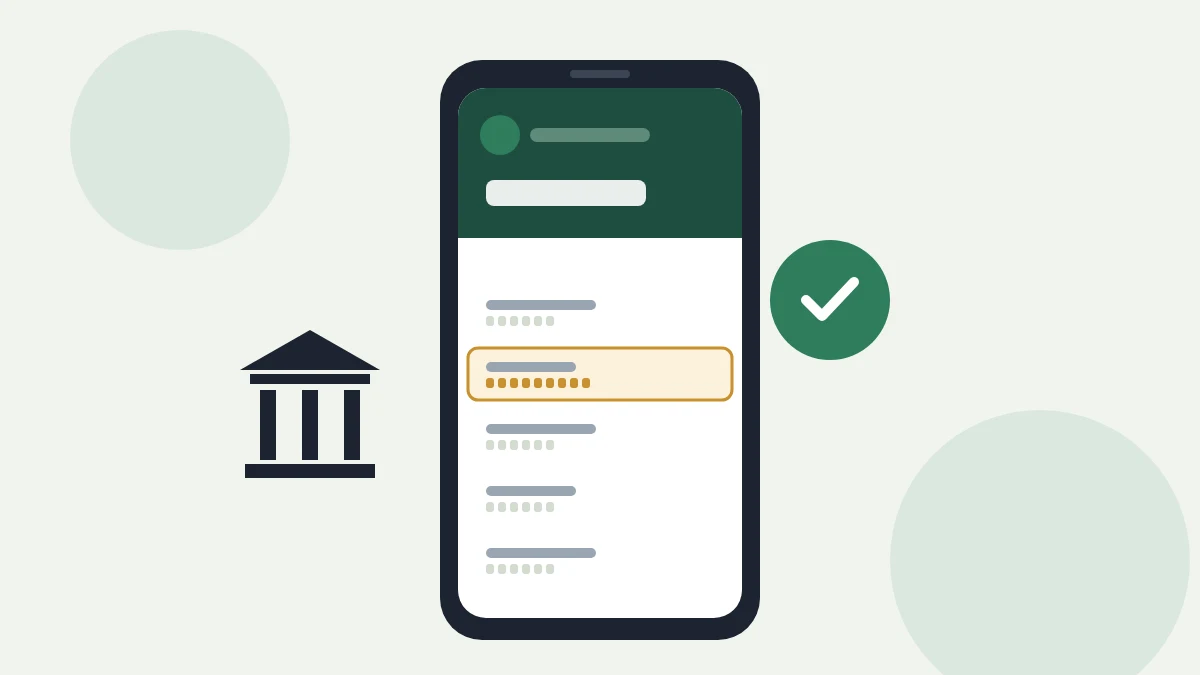
Be careful with two shortcuts. Random routing number websites are sometimes outdated, especially after bank mergers. Deposit slips can also be misleading, because some banks print an internal processing number on them that won’t work for direct deposit. When in doubt, use a check or your bank’s own app.
ACH vs. Wire Routing Numbers (and Why Your State Matters)
Not every bank uses one routing number for everything. Big national banks often assign routing numbers based on the state where you opened your account. Chase, for example, uses different routing numbers for customers in New York, California, Texas, and other states. If you moved after opening your account, your routing number usually stays tied to the original state.
Some banks also use a separate routing number for wire transfers. The number on your check is the ACH routing number, which handles direct deposit, autopay, and most transfers between banks. If someone is sending you a wire, look up your bank’s wire instructions or ask your bank directly.
International transfers work differently. Routing numbers only work inside the US. To receive money from abroad, you’ll typically need your bank’s SWIFT code instead.
When You’ll Need Your Routing Number
You’ll reach for your routing number more often than you might think. Common reasons include:
- Setting up direct deposit with a new employer
- Getting your federal tax refund by direct deposit on Form 1040
- Setting up autopay for your mortgage, rent, utilities, or car loan
- Linking your bank account to PayPal, Venmo, or a brokerage account
- Receiving Social Security or other government benefits
Direct deposit information matters more now for federal payments. A 2025 executive order directed the Treasury to stop issuing paper checks for most federal payments starting September 30, 2025, with limited exceptions. If you’re expecting a tax refund or federal benefit, make sure the IRS or agency has your correct routing and account numbers.
How to Void a Check for Direct Deposit
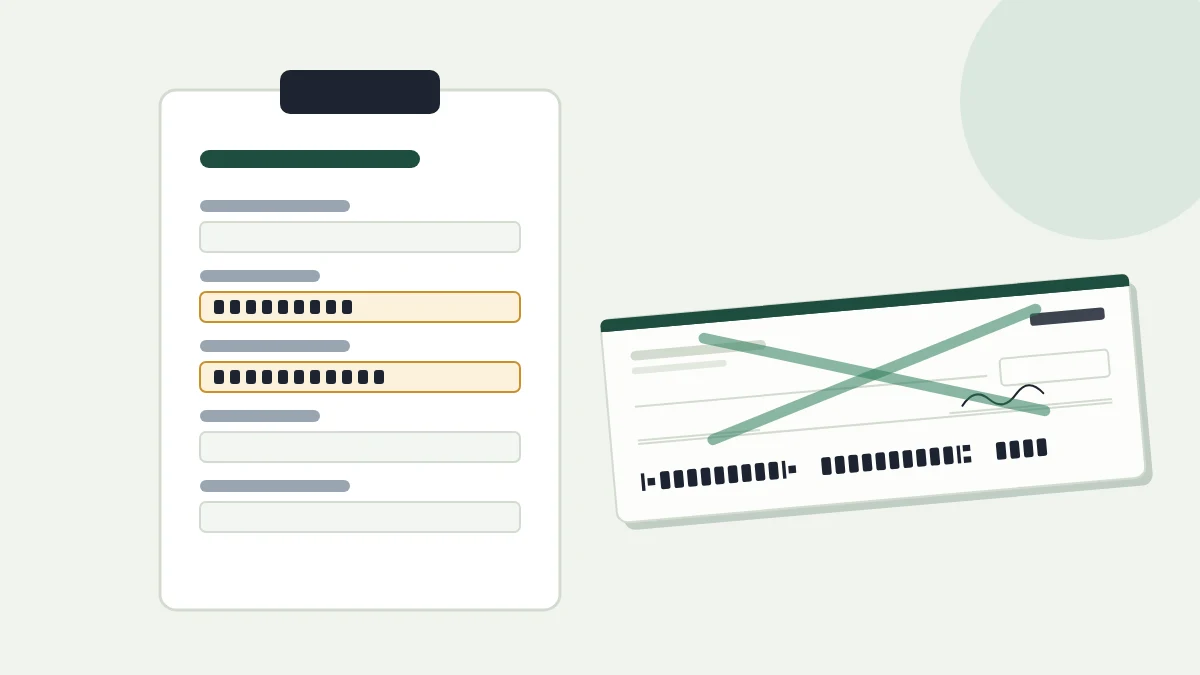
Some employers ask for a voided check instead of typed-out numbers. Write “VOID” in large letters across the front of the check in blue or black ink. Don’t cover the numbers along the bottom, since your employer needs to read them. Then log the check number as voided in your check register.
Is It Safe to Share Your Routing Number?
Your routing number by itself is public. Your bank posts it online, and it’s printed on every check you write. The risk comes from your account number. Someone with both numbers could try to set up unauthorized electronic withdrawals or print fake checks.
Check fraud has become a real problem in the US. In 2023, the Treasury Department’s Financial Crimes Enforcement Network (FinCEN) warned about a nationwide surge in check fraud tied to stolen mail. A few simple habits help:
- Share your account number only with employers, billers, and services you trust.
- Mail checks from inside a post office instead of leaving them in your mailbox.
- Turn on transaction alerts in your bank’s app.
- Review your statements every month, and report unauthorized debits quickly. Federal rules give you stronger protection when you report promptly.
FAQs About Finding Your Routing Number
Is the routing number the first or second number on a check?
On personal checks, the routing number is the first set of numbers in the bottom-left corner. It’s always nine digits and sits between two ⑆ symbols. On some business checks, the check number comes first, so look for the nine-digit number between those symbols instead.
Is the routing number the same on all my checks?
Yes, for the same account. Every check in your checkbook shows the same routing number and account number. Only the check number changes. Other customers at your bank may share your routing number too, especially if they opened their accounts in the same state.
Can I find my routing number online?
Yes. Log in to your bank’s app or website and open your account details, where both numbers are usually listed. Banks also post routing numbers on their public websites, often sorted by state. The American Bankers Association also offers a free lookup tool at routingnumber.aba.com, with a limited number of searches.
Is an ABA number the same as a routing number?
Yes. ABA number, ABA routing number, routing transit number (RTN), and bank routing number all mean the same nine-digit code. The American Bankers Association created the system in 1910 to identify which bank a check is drawn on. Your bank may also call it an ACH routing number.
What happens if I use the wrong routing number?
If the routing number is invalid, the payment usually gets rejected and returned, which can take several business days. If the number belongs to a different bank, the transfer will likely still fail because your account number won’t exist there. Contact your bank and the sender quickly so they can trace the payment.
Do I need a routing number for international transfers?
Not usually. Routing numbers only work within the US banking system. To receive money from another country, you’ll typically need your bank’s SWIFT code (also called a BIC) along with your account number. Some banks route incoming international wires through another bank, so ask yours for exact instructions.
Your Next Step
Grab a check or open your banking app now and find the nine-digit number. Then run the check-digit test to make sure you copied it correctly. If you’re filling out a direct deposit or tax form, enter the routing number first and confirm it against your bank’s app before you hit submit. A two-minute check now can save you a week of waiting on a bounced payment.