Thanksgiving is a national holiday in the United States, held every year on the fourth Thursday of November, when Americans gather for a big meal and take stock of what they’re grateful for. In 2026, it falls on Thursday, November 26. So, what is Thanksgiving beyond turkey and football? The short answer: it’s a harvest celebration with roots in a 1621 gathering at Plymouth, turned into a national holiday by Abraham Lincoln in 1863.
The longer answer is more interesting, a little more complicated, and worth knowing before you sit down at the table this year.
Key Takeaways
- Thanksgiving is a federal holiday on the fourth Thursday of November. In 2026, that’s November 26.
- The “first Thanksgiving” was a three-day harvest gathering in 1621 between about 53 Pilgrims and roughly 90 Wampanoag men.
- Lincoln made Thanksgiving a national holiday in 1863, and Congress fixed the fourth-Thursday date in 1941.
- Today, we celebrate Thanksgiving to give thanks, reconnect with family, and kick off the holiday season.
- Many Native Americans mark the day differently, including a National Day of Mourning held in Plymouth since 1970.
What Is Thanksgiving? The Quick Answer
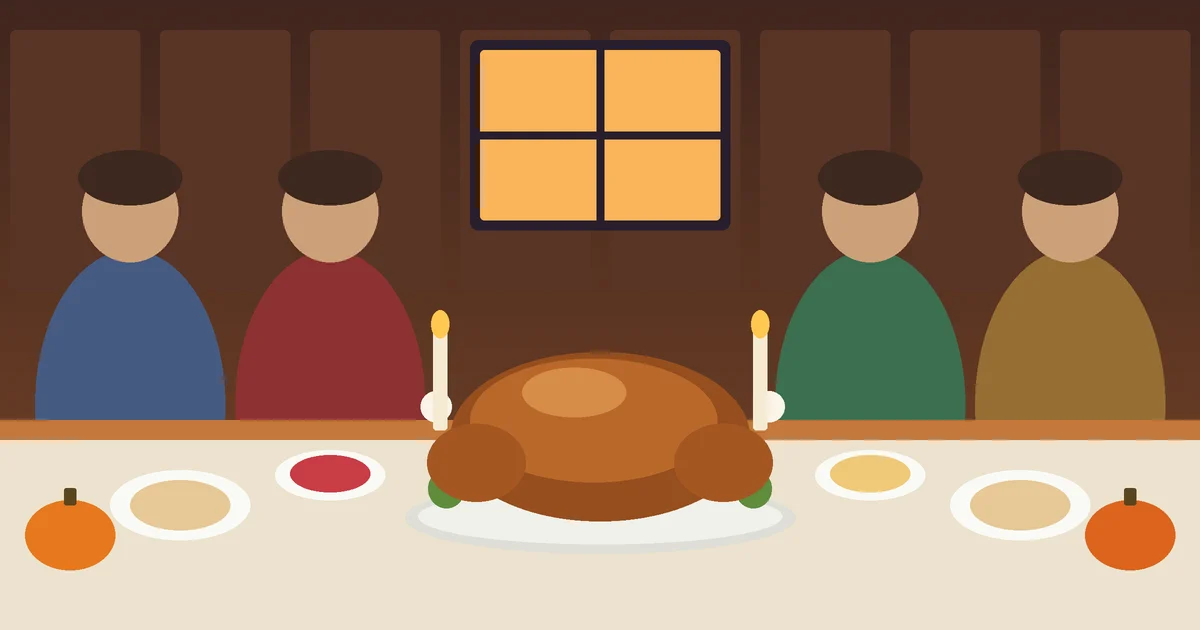
Thanksgiving is an American holiday built around gratitude, family, and food. Offices, schools, banks, and the post office close, and tens of millions of people travel to spend the day with relatives. The centerpiece is a large afternoon or evening meal, usually roast turkey with stuffing, mashed potatoes, cranberry sauce, and pumpkin pie.
Because the date is tied to the fourth Thursday, it moves around. It can land anywhere from November 22 to November 28. Here’s what’s coming up:
| Year | Thanksgiving Date | Day |
|---|---|---|
| 2026 | November 26, 2026 | Thursday |
| 2027 | November 25, 2027 | Thursday |
| 2028 | November 23, 2028 | Thursday |
A late Thanksgiving like 2026’s means a shorter run to Christmas, so start your turkey shopping early (thaw times are below).
The First Thanksgiving in 1621: What Really Happened
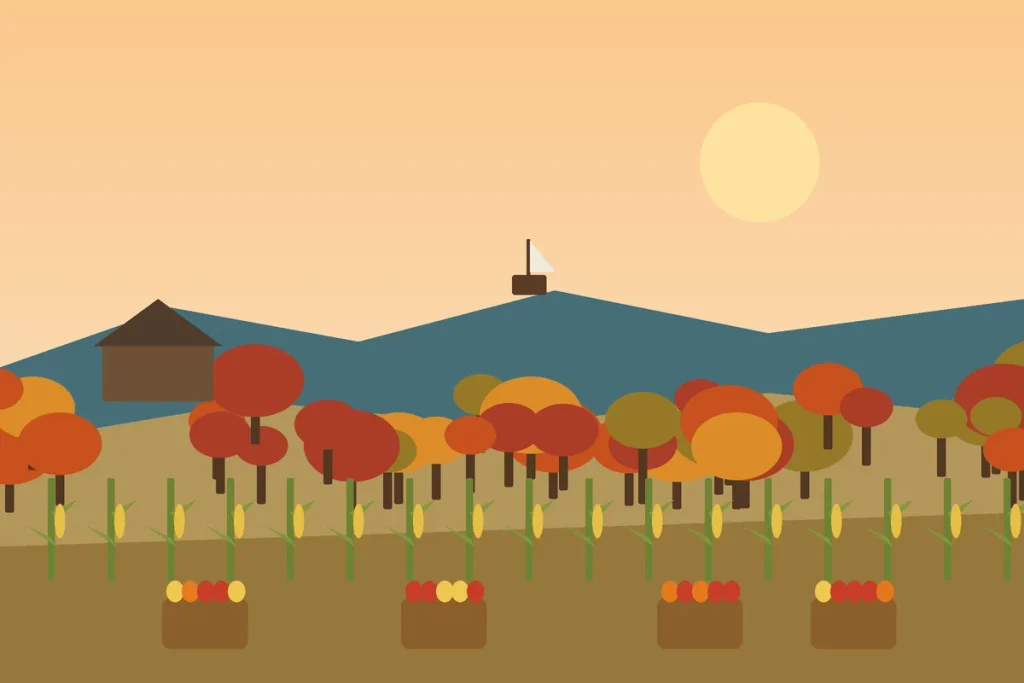
The story most of us learned in grade school is a simplified version. The Pilgrims arrived on the Mayflower in late 1620, and roughly half of them died during that first brutal New England winter. With help from the Wampanoag people, whose homeland the colony sat in the middle of, the survivors planted corn and brought in a successful harvest in the fall of 1621.
To celebrate, the colonists held a harvest festival. According to Pilgrim Hall Museum in Plymouth, only two firsthand accounts of the event exist, and both were written by the English. The most detailed is a letter Edward Winslow wrote on December 11, 1621.
Who Was at the First Thanksgiving?
About 53 Pilgrims attended, all of them Mayflower survivors. They were joined by around 90 Wampanoag men led by the sachem Ousamequin, better known to the English as Massasoit. That means Native guests outnumbered the colonists almost two to one, a detail that most classroom paintings get wrong.
Historians at Pilgrim Hall describe the gathering as a diplomatic occasion as much as a party. The Wampanoag and the colonists had signed a mutual defense agreement that spring, and the feast reflected that alliance. It lasted three days and included food, games, and the firing of guns.
What Did They Actually Eat?
Winslow’s letter mentions wildfowl the colonists hunted and five deer the Wampanoag brought as a gift. Beyond that, historians fill in the gaps with what was available in Massachusetts in autumn: corn, shellfish, fish, and native vegetables. Turkey may have been part of the “fowl,” but nobody wrote it down. Pumpkin pie almost certainly wasn’t on the table, since the colonists had no ovens for baking and very little sugar.
One more thing worth knowing: the Pilgrims didn’t call it “Thanksgiving.” To them, a thanksgiving was a solemn day of prayer, not a feast. The 1621 event got that label much later.
The History of Thanksgiving as a National Holiday
The 1621 harvest didn’t start an annual tradition right away. For the next two centuries, days of thanksgiving were declared here and there by colonies, states, and occasionally presidents.
George Washington’s 1789 Proclamation
At the request of Congress, President George Washington declared Thursday, November 26, 1789, a national day of public thanksgiving. It was the first one under the new Constitution. Still, it was a one-time event, and later presidents were inconsistent about repeating it.
Sarah Josepha Hale and Abraham Lincoln
The person most responsible for the Thanksgiving we know is Sarah Josepha Hale, the editor of Godey’s Lady’s Book (and the author of “Mary Had a Little Lamb”). She spent decades writing editorials and letters to presidents asking for a fixed national Thanksgiving Day. Four presidents ignored her.
The fifth, Abraham Lincoln, said yes. In the middle of the Civil War, just months after Gettysburg, Lincoln issued a proclamation on October 3, 1863, setting aside the last Thursday of November as a national day of thanksgiving. You can read about the proclamation through the National Archives. Every president since has issued a Thanksgiving proclamation.
FDR, “Franksgiving,” and the Fourth Thursday Rule
In 1939, November had five Thursdays. Retailers worried that a late holiday would shorten the Christmas shopping season during the Great Depression, so President Franklin D. Roosevelt moved Thanksgiving up a week. The backlash was loud. Critics nicknamed it “Franksgiving,” and states split, with some following the new date and others sticking with the old one.
Congress settled it. On December 26, 1941, Roosevelt signed a law making the fourth Thursday of November the official federal Thanksgiving holiday. That rule still holds today.
Why Do We Celebrate Thanksgiving Today?
Knowing what Thanksgiving is helps explain why it has lasted. Most families celebrate for the same few reasons:
- Gratitude. The holiday’s whole point is pausing to say thanks for family, health, work, and the year’s good fortune.
- Family and friends. It’s one of the few days when relatives scattered across the country make the trip home. AAA routinely ranks Thanksgiving week among the busiest travel periods of the year.
- A shared American tradition. Thanksgiving isn’t tied to one religion, so families of every faith and background celebrate it. Many immigrant families add their own dishes, which is one of the best parts.
- The start of the holiday season. For many Americans, Thanksgiving marks the moment the calendar flips from fall to the December holidays.
Popular Thanksgiving Traditions in America
The Thanksgiving Dinner
Turkey is the star. Around it you’ll usually find stuffing (or “dressing” in much of the South), mashed potatoes, gravy, sweet potatoes, green bean casserole, cranberry sauce, rolls, and at least one pie. Regional twists are common: oyster dressing along the coast, cornbread dressing in Georgia, and tamales on plenty of Texas tables.
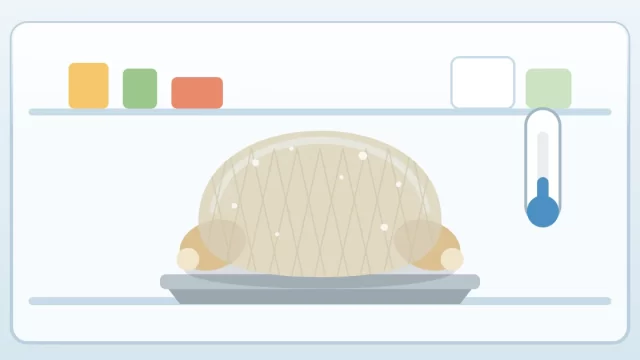
If you’re cooking, the biggest mistake is underestimating thaw time. The USDA’s Safe Thanksgiving Guide recommends thawing a frozen turkey in the refrigerator, allowing about 24 hours for every 4 to 5 pounds. A 20-pound bird needs four to five days, so for 2026 you’d want it in the fridge by the Saturday or Sunday before. Cook it until the thickest part of the breast, the innermost thigh, and the wing all reach 165°F, and get leftovers into the fridge within two hours.
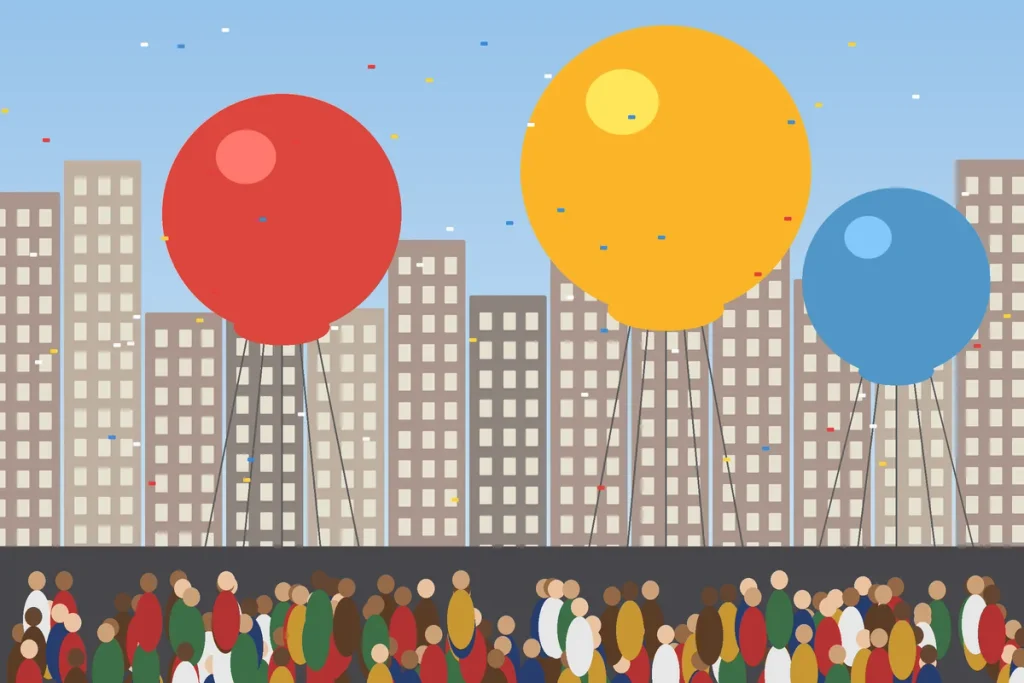
The Macy’s Thanksgiving Day Parade
The Macy’s parade in New York City started in 1924, and 2026 is a big one: it’s the 100th parade. (It skipped 1942 through 1944 during World War II, which is why the 100th lands in 2026 instead of 2024.) It starts at 8:30 a.m. Eastern on Thursday, November 26, and airs on NBC and Peacock.
Thanksgiving Football
Football on Thanksgiving goes back well over a century. The Detroit Lions have hosted a Thanksgiving game almost every year since 1934, and the Dallas Cowboys have been regulars since the 1960s. These days there are three NFL games, so the TV is usually on from noon until late evening.
The Presidential Turkey Pardon
Every year, the president “pardons” a turkey or two at the White House, sparing them from the dinner table. Presidents received gift turkeys for decades, but George H.W. Bush turned the pardon into a formal annual ceremony in 1989.
Thanksgiving From a Native American Perspective
For many Native Americans, Thanksgiving isn’t a simple celebration. The friendly 1621 feast was followed by decades of land loss, disease, and war, including King Philip’s War in the 1670s, which devastated the Wampanoag.
Since 1970, the United American Indians of New England have held a National Day of Mourning at noon on Thanksgiving Day on Cole’s Hill in Plymouth, Massachusetts, overlooking Plymouth Rock. It’s a day of remembrance and protest. Other Native families do celebrate Thanksgiving as a harvest and family gathering. Knowing both sides makes for a more honest conversation at the table, especially if you have kids asking questions.
Is Thanksgiving a Federal Holiday?
Yes. Thanksgiving is one of the eleven federal holidays listed in federal law, so federal offices, banks, the stock market, and the U.S. Postal Service are closed. Most private employers give the day off too, though retail, healthcare, and restaurant workers often still clock in.
The Friday after is a different story, and it depends on your state and employer. It isn’t a federal holiday, but many states give their employees the day off. California, for example, lists the day after Thanksgiving as a state holiday. If you’re not sure, check your state’s official holiday calendar or your employee handbook.
Thanksgiving in the US vs. Canada
Canada celebrates Thanksgiving too, but on a different schedule and with a different backstory.
| United States | Canada | |
|---|---|---|
| Date | Fourth Thursday of November | Second Monday of October |
| Origin story | 1621 Plymouth harvest; Lincoln’s 1863 proclamation | Earlier European harvest observances; national date set by Parliament in 1957 |
| Typical meal | Turkey, stuffing, pumpkin pie | Very similar, often turkey and pumpkin pie |
| Big events | Macy’s parade, NFL games, Black Friday | CFL doubleheader, long-weekend gatherings |
If you love fall holidays, our guide on what Halloween is and why we celebrate it covers the October holiday that comes right before Thanksgiving.
Frequently Asked Questions
When is Thanksgiving 2026?
Thanksgiving 2026 falls on Thursday, November 26. Federal law sets the holiday on the fourth Thursday of November, so the date shifts each year between November 22 and November 28. In 2027 it lands on November 25, and in 2028 on November 23. Federal offices, banks, and schools are closed that day.
Who made Thanksgiving a national holiday?
President Abraham Lincoln made Thanksgiving a national holiday on October 3, 1863, after a decades-long letter campaign by magazine editor Sarah Josepha Hale. He set it for the last Thursday of November. In 1941, President Franklin D. Roosevelt signed a law fixing the holiday permanently on the fourth Thursday of November.
What did they eat at the first Thanksgiving?
Edward Winslow’s 1621 letter mentions wildfowl hunted by the colonists and five deer brought by the Wampanoag. Historians think the meal likely included corn, fish, shellfish, and local vegetables. Pumpkin pie almost certainly wasn’t served, since the colonists had no ovens and little sugar. Turkey may have been among the fowl.
Why is Thanksgiving always on a Thursday?
Thursday dates back to colonial New England, where weekday religious lectures were commonly held on Thursdays, and early days of thanksgiving often followed that pattern. George Washington chose a Thursday in 1789, Lincoln picked the last Thursday of November in 1863, and Congress made the fourth Thursday official in 1941.
Is Thanksgiving a religious holiday?
No. Thanksgiving is a secular federal holiday that Americans of every faith celebrate. Its roots include Puritan days of prayer, and Lincoln’s 1863 proclamation used religious language, so many families still say grace before eating. Today most people treat it as a cultural holiday centered on family, food, gratitude, and football.
Why do some Native Americans not celebrate Thanksgiving?
Many Native Americans see Thanksgiving as a reminder of the colonization, land loss, and violence that followed 1621. Since 1970, the United American Indians of New England have held a National Day of Mourning at noon on Thanksgiving in Plymouth, Massachusetts. Other Native families celebrate the day as a harvest and family gathering.
Make This Thanksgiving Count
Now you know what Thanksgiving is: a 400-year-old harvest story, a holiday Lincoln created to hold a divided country together, and a day most Americans still spend around a crowded table. This year, put two things on your calendar. Move your turkey to the fridge about five days before November 26, and save one minute at dinner to share where the holiday came from, including the Wampanoag side of the story. It makes the meal mean a little more.