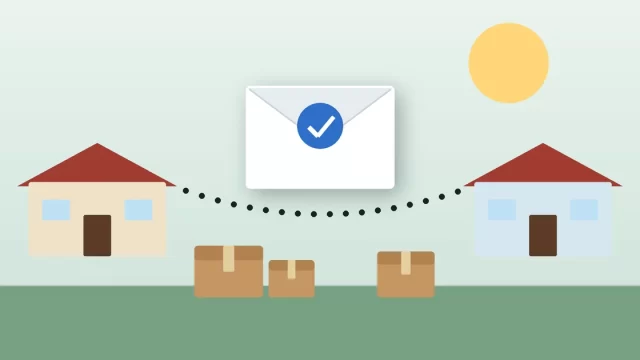
To roll over a 401(k) to an IRA, open an IRA at a brokerage, ask your old plan for a direct rollover, and have the money sent straight to the new account. Then invest it once it lands. Most rollovers finish in one to three weeks, and when you do it as a direct rollover you owe no tax and nothing gets withheld.
The trouble is in the details: the 20% withholding trap, Roth money sent to the wrong account, savings left in cash for months. Here’s the exact 401(k) rollover process and the mistakes to avoid.
Key Takeaways
- When you move a 401(k) to an IRA, always ask for a direct rollover. It skips the mandatory 20% federal withholding and the 60-day deadline.
- Pre-tax 401(k) money goes to a traditional (rollover) IRA. Roth 401(k) money goes to a Roth IRA.
- A 401(k) rollover doesn’t count toward the IRS one-rollover-per-year limit.
- Your 401(k) rollover arrives as cash. You have to invest it yourself.
- Think twice if you plan to retire between 55 and 59½, hold company stock, or need strong creditor protection.
Should You Roll Over a 401(k) to an IRA?
For most people who’ve left a job, yes. An IRA usually gives you thousands of funds to pick from instead of the couple dozen on a typical plan menu. You can also fold several old 401(k)s into one account, which makes your money far easier to track and, later, your required minimum distributions easier to manage.
That said, a 401(k) rollover isn’t automatic. Here’s how your four choices stack up:
| Option | Best for | Watch out for |
|---|---|---|
| Leave it in the old plan | Great low-cost plans, early retirees using the Rule of 55 | Losing track of the account, limited fund choices |
| Roll to your new employer’s 401(k) | Keeping loans and creditor protection, backdoor Roth users | New plan must accept roll-ins, fund menu may be weak |
| Roll the 401(k) to an IRA | Most job changers and retirees who want control | Salespeople pushing high-fee products |
| Cash it out | Almost nobody | Income tax plus a 10% penalty if you’re under 59½ |
When skipping the 401(k) rollover makes more sense
- You’re retiring at 55 to 59½. The Rule of 55 lets you take penalty-free withdrawals from the 401(k) of the employer you left in or after the year you turn 55. Move that money to an IRA and the exception is gone.
- You hold company stock. Net unrealized appreciation (NUA) rules can let you pay lower capital gains rates on the stock’s growth, but only if you don’t roll the shares into an IRA.
- You do backdoor Roth contributions. A big pre-tax IRA balance makes future backdoor Roth conversions mostly taxable under the pro-rata rule.
- Creditor protection matters to you. 401(k)s get broad federal protection under ERISA, while IRA protection outside bankruptcy depends on your state. Texas shields IRAs broadly. California protects them only as far as needed for your support.
Step-by-Step: How to Roll Over a 401(k) to an IRA
Step 1: Gather your 401(k) details
Before you request a 401(k) rollover, log in to your old plan’s website (common administrators include Fidelity NetBenefits, Empower, Vanguard, and Principal) and pull your latest statement. Write down three things: your total vested balance, how much is pre-tax versus Roth or after-tax, and whether you have an outstanding 401(k) loan.
That money-type split decides which kind of IRA you need, so it matters more than anything else on the statement.
Step 2: Choose where your rollover IRA will live
For your 401(k) rollover, pick a firm with no account fees and cheap index funds. Fidelity, Charles Schwab, and Vanguard all fit that description, and each has a dedicated rollover team that will walk you through the paperwork for free.
My take: a big brokerage plus one target-date index fund beats a “free” chat with a commission-based advisor.
Step 3: Open the right type of IRA
Open a rollover IRA (a traditional IRA used for 401(k) money) for pre-tax dollars. If your 401(k) has a Roth portion, open a Roth IRA too. You’ll get account numbers right away, and the new firm will give you its rollover instructions, including the exact payee line and mailing address your old plan needs.
Checks are usually payable to the new custodian “FBO” (for the benefit of) your name. Get the wording exactly right, or the plan may pay the money to you instead.
Step 4: Request a direct 401(k) rollover from your old plan
Contact the old plan online or by phone and request a direct rollover, not a “distribution” or “withdrawal.” Give them the receiving firm’s name, your new account number, and the payee details. Some plans need a paper form, and a few require a notarized signature or spousal consent.
Ask how the money will be sent. Some plans wire it, but many mail a check, either to the new firm or to your house. A check made payable to your IRA custodian still counts as a direct rollover, even if it’s mailed to you.
Step 5: Deliver the check and track the transfer
If the check comes to you, write your new IRA account number on it and send it to the brokerage within a few days using a trackable service. Don’t let it sit in a drawer. Then check your IRA every few days until the 401(k) money shows up.
Step 6: Invest the money
Here’s the step people forget. Money from a 401(k) rollover usually lands in the account’s cash or money market position, and it stays there until you choose investments. I’ve seen people find out a year later that their entire rollover had been sitting in cash through a strong market. Pick your funds the day the money arrives.
Step 7: Watch for your tax forms
Early next year, your old plan will send Form 1099-R for the 401(k) rollover. A direct rollover shows distribution code G in box 7. Your IRA firm sends Form 5498 showing the rollover deposit. On your Form 1040, you report the gross amount on line 5a, enter $0 as taxable on line 5b, and write “Rollover” next to it.
Direct Rollover vs. Indirect Rollover: The 60-Day Rule
A direct rollover moves money from your 401(k) to an IRA without you ever touching it. An indirect rollover pays the money to you first, and that’s where things get expensive.
| Feature | Direct rollover | Indirect (60-day) rollover |
|---|---|---|
| Who gets the money | Your new IRA | You |
| Federal tax withheld | None | Mandatory 20% |
| Deadline | None | 60 days from receipt |
| Risk of taxes and penalties | Very low | High if you miss the deadline |
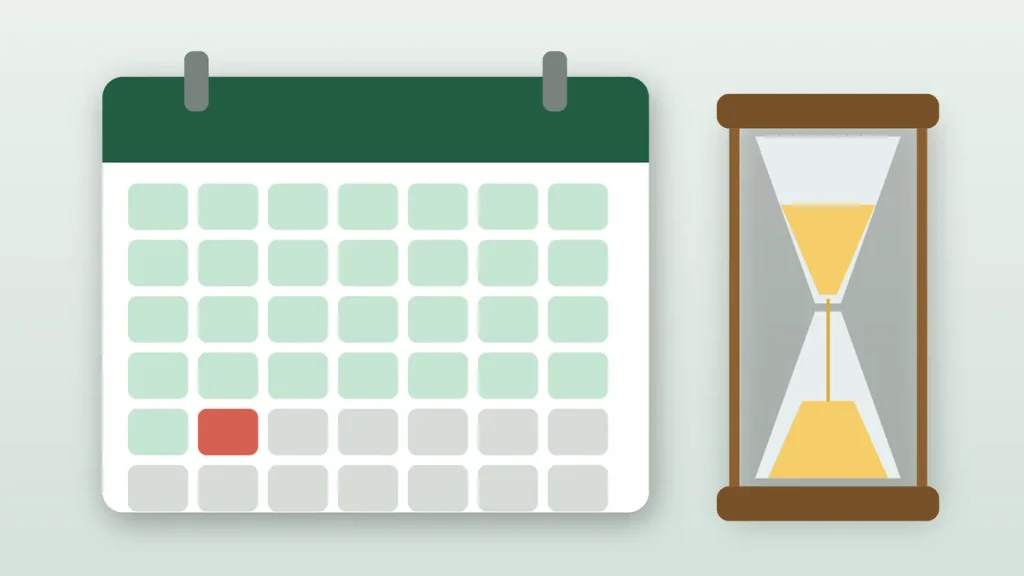
Here’s how the indirect math works. Say you have $50,000 in your 401(k) and take a check. The plan withholds 20%, so you receive $40,000. To finish a full rollover, you must deposit the entire $50,000 into the IRA within 60 days, which means coming up with $10,000 of your own cash. You get that $10,000 back as a refund when you file your taxes.
Deposit only the $40,000 and the IRS treats the missing $10,000 as a withdrawal. You’ll owe income tax on it, plus a 10% early withdrawal penalty if you’re under 59½. The IRS rollover rules page spells out these deadlines, along with the limited cases where it will waive the 60-day rule.
One piece of good news: the IRA one-rollover-per-year rule only applies to IRA-to-IRA rollovers. Moving money from a 401(k) to an IRA doesn’t count toward it.
How to Roll a Roth 401(k) to a Roth IRA
Roth 401(k) money can only go into a Roth IRA or another Roth workplace account. It can’t go into a traditional IRA. The IRS rollover chart shows every allowed combination if your situation is unusual.
Watch the Roth IRA five-year rule. Time spent in the Roth 401(k) doesn’t carry over, so a brand-new Roth IRA starts its own five-year clock for tax-free earnings. The fix: open a Roth IRA early, even with a small contribution.
Got after-tax (non-Roth) contributions? IRS guidance lets you split the rollover: after-tax contributions to a Roth IRA tax-free, pre-tax money to a traditional IRA.
Converting pre-tax 401(k) money into a Roth IRA is allowed, but the full converted amount counts as taxable income that year. Run the numbers with a tax pro before doing it on a large balance.
Common 401(k) Rollover Mistakes to Avoid
Most problems when people move a 401(k) to an IRA come from a handful of avoidable slips.
- Taking a check made out to you. This triggers the 20% withholding. Insist on a direct rollover.
- Forgetting an outstanding loan. If you leave with an unpaid 401(k) loan, the plan usually offsets it against your balance. You can still roll that offset amount into an IRA with your own cash, up to your tax filing deadline including extensions. If you’re weighing loans versus withdrawals, our guide on how to take a loan from your 401(k) explains how repayment works.
- Rolling company stock without checking NUA. Once those shares land in an IRA, the NUA tax break is gone for good.
- Ignoring small balances. Plans can cash out balances under $1,000 or move balances up to $7,000 into an IRA chosen by the plan. Those default IRAs often sit in low-yield cash, so move the money yourself.
- Buying what a salesperson pitches. A 401(k) rollover is a big commission opportunity. Be wary of variable annuities or high-fee funds recommended inside an IRA.
- Leaving cash uninvested. For a short-term parking spot, see our high-yield savings account vs money market account guide. Long-term retirement money belongs in investments.
Thinking about tapping your 401(k) instead of moving it to an IRA? Read 401(k) loan vs hardship withdrawal first.
Frequently Asked Questions
How long does it take to roll over a 401(k) to an IRA?
Most direct 401(k) rollovers take one to three weeks from request to deposit. Electronic transfers can finish in a few business days, while mailed checks and plans that require paper forms or notarized signatures take longer. Call the old plan a week after your request to confirm it was processed, and check your new IRA for the deposit.
Do you pay taxes when you roll over a 401(k) to an IRA?
No, as long as pre-tax money moves to a traditional IRA and Roth money moves to a Roth IRA through a direct rollover. You’ll still get a Form 1099-R, but the taxable amount is $0. Taxes only apply if you convert pre-tax money to a Roth IRA or miss the 60-day deadline on an indirect rollover.
Can I roll over my 401(k) while still working?
Sometimes. Many plans allow an in-service rollover once you reach age 59½, and some allow it earlier for certain money types, such as rollover or after-tax contributions. Check your plan’s summary plan description or call the administrator. If your plan doesn’t allow it, you’ll need to wait until you leave the job.
Is there a limit on how much you can roll over from a 401(k) to an IRA?
No. You can roll over your entire vested balance, whether it’s $5,000 or $2 million. Rollovers don’t count toward the annual IRA contribution limit, which is $7,500 for 2026 (plus $1,100 if you’re 50 or older), so you can still make your regular contribution the same year.
What happens if I miss the 60-day rollover deadline?
The money you didn’t redeposit is treated as a distribution. You’ll owe income tax on it, plus a 10% penalty if you’re under 59½. The IRS may waive the deadline for reasons beyond your control, such as a bank error or serious illness, and allows self-certification in some cases through a written letter to your IRA custodian.
Can I roll over a 401(k) to a Roth IRA?
Yes. Roth 401(k) money rolls into a Roth IRA tax-free. You can also roll pre-tax 401(k) money into a Roth IRA, but that’s a Roth conversion, so the full amount is added to your taxable income for the year. Converting during a lower-income year, such as early retirement, can reduce the tax bill.
Your Next Step
Log in to your old 401(k) today and write down your vested balance and how much is pre-tax versus Roth. Then open a rollover IRA (and a Roth IRA if you need one) at a low-cost brokerage and call its rollover team. They’ll tell you exactly what to say to your old plan. Roll over a 401(k) to an IRA as a direct rollover, invest the money the day it arrives, and you’ll have done the job better than most people do.