For most people, a high-yield savings account is the better choice. In the high-yield savings account vs money market account matchup, the top online savings accounts pay roughly 4.2% to 4.3% APY as of late October 2026, while the best money market accounts top out around 4.05%, and you usually don’t need a big balance to earn the savings rate. A money market account only wins if you want to write checks or swipe a debit card straight from your savings.
The rate gap is small, so the real question is how you plan to use the money.
Key Takeaways
- Rates are close: Top high-yield savings accounts and top money market accounts are within a few tenths of a percent of each other right now.
- Access is the real difference: Money market accounts often include checks and a debit card. Most high-yield savings accounts only allow online transfers.
- Both are equally safe: Each is covered up to $250,000 per depositor, per bank, per ownership category by the FDIC (or NCUA at credit unions).
- Watch the minimums: Some money market accounts pay their best rate only on balances of $10,000 or more.
- Don’t confuse it with a fund: A money market account is a bank deposit. A money market fund is an investment and isn’t FDIC insured.
What’s the Difference Between a High-Yield Savings Account and a Money Market Account?
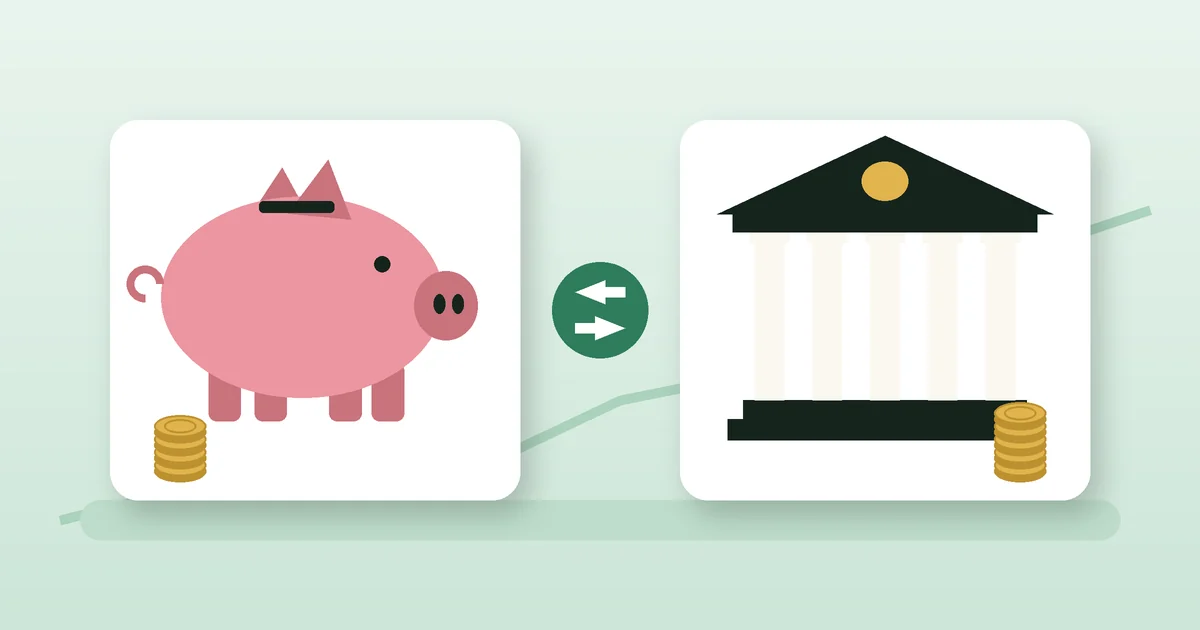
Both are interest-earning deposit accounts at a bank or credit union. Both pay a variable rate, and both are protected by federal deposit insurance. The differences come down to how you get your money out and how much you need to keep in the account.
How a high-yield savings account works
A high-yield savings account (HYSA) is a regular savings account that pays far more than the average. Most are offered by online banks like Ally, Marcus by Goldman Sachs, and Bread Savings, which can pay more because they don’t run branches. You move money in and out with electronic transfers to a linked checking account, and that usually takes one to three business days.
Many HYSAs have no minimum balance and no monthly fee. You earn the same APY on $50 as you do on $50,000.
How a money market account works
A money market account (MMA) is a savings account with some checking features built in. Depending on the bank, you may get paper checks, a debit card, or ATM access. Rates are often tiered, so a larger balance can earn a higher APY.
That extra flexibility is why some banks ask for a higher opening deposit or a minimum balance to avoid a fee.
High-Yield Savings vs Money Market Account: Side-by-Side Comparison
Here’s how the two stack up on the features that matter most. Rates are approximate and change often, so treat them as a snapshot from October 2026.
| Feature | High-Yield Savings Account | Money Market Account |
|---|---|---|
| Top APYs (October 2026) | About 4.2% to 4.3% | About 4.0% to 4.05% |
| FDIC national average rate (August 2026) | 0.38% | 0.63% |
| Minimum to open | Often $0 to $100 | Often $0 to $2,500 or more |
| Balance needed for top rate | Usually none | Sometimes $10,000 or more |
| Check writing | Rarely | Often |
| Debit card or ATM access | Rarely | Often |
| Withdrawal limits | Set by each bank | Set by each bank |
| Deposit insurance | FDIC or NCUA, up to $250,000 | FDIC or NCUA, up to $250,000 |
| Best for | Emergency funds, savings goals | Large balances you may need to spend directly |
Money Market Account Rates vs High-Yield Savings Rates Right Now
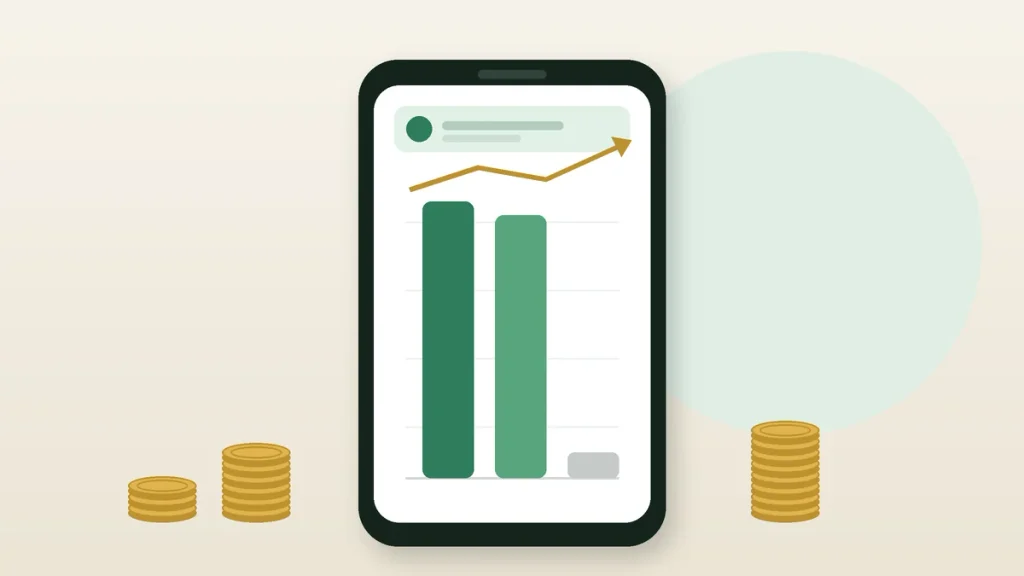
As of late October 2026, the best high-yield savings account rates sit around 4.2% to 4.3% APY, with a few promotional offers a bit higher. The best money market account rates run close behind at about 4.05% APY, according to rate tables from Bankrate and NerdWallet. The Federal Reserve raised its benchmark rate by a quarter point on September 16, 2026, to a range of 3.75% to 4.00%, and online banks have nudged their savings rates up since then.
Now look at the averages. The FDIC’s national rates put the typical savings account at just 0.38% and the typical money market account at 0.63% (August 2026 figures). At a big branch bank, the MMA usually beats regular savings, but an online HYSA beats both.
What the difference looks like in dollars
Say you keep a $20,000 emergency fund. Here’s roughly what you’d earn in a year, assuming the rate stays flat:
- High-yield savings at 4.25% APY: about $850
- Money market at 4.05% APY: about $810
- Average savings account at 0.38%: about $76
The gap between a good HYSA and a good MMA is about $40 a year. The gap between either one and a typical big-bank savings account is more than $700. People agonize over the first choice and ignore the second. Leaving a near-zero account is what actually pays.
Both rates are variable, so the leader today may not lead six months from now.
Money Market Account vs Savings Account: Access to Your Cash
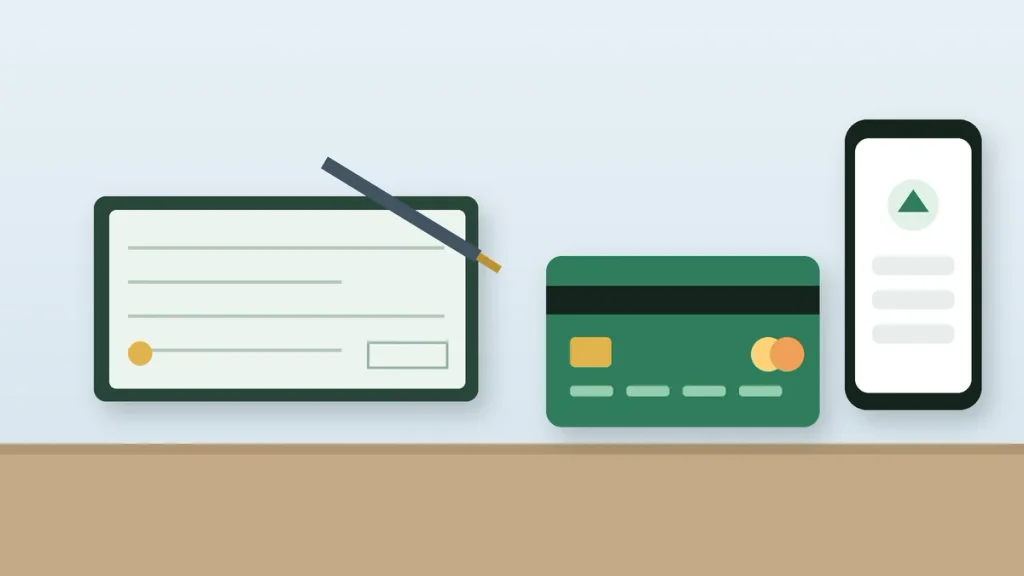
This is where the two accounts really split apart. A money market account can often act like a backup checking account. You can write a check for a contractor or pay a big bill directly from it. A high-yield savings account usually requires you to transfer money to checking first, then pay from there.
Both used to be bound by the same federal six-withdrawal rule under Regulation D. The Federal Reserve removed that limit on April 24, 2020, but the rule only allowed banks to drop it. It didn’t require them to. Plenty of banks still cap you at six withdrawals per month and charge a fee or convert the account if you go over, so read the fee schedule before you open anything.
One practical tip: think about timing, not just access. If your car’s transmission dies on a Friday night, a debit card on your MMA lets you pay the shop on the spot. With a HYSA, a transfer you start Friday evening might not land in checking until Tuesday. If that delay worries you, keep a cushion in checking.
Are Money Market Accounts Safe? (And High-Yield Savings Accounts?)
Yes, both are as safe as any bank account in the country. Deposits at an FDIC-insured bank are covered up to $250,000 per depositor, per insured bank, for each account ownership category, as explained in the FDIC’s deposit insurance guide. Credit union accounts get the same $250,000 protection from the NCUA.

That limit is per bank, not per account. If you have $200,000 in a money market account and $100,000 in a savings account at the same bank, both in your name alone, $50,000 is uninsured. A joint account or a second bank solves that.
Money market account vs money market fund
This is the mistake I see most often. A money market account is a bank deposit. A money market fund is a mutual fund sold by brokerages like Fidelity, Vanguard, and Charles Schwab. Funds are generally very low risk, but they’re investments, not deposits, so they aren’t FDIC insured. If an app shows you a “money market” yield, check whether you’re opening a bank account or buying fund shares.
How Interest on Both Accounts Is Taxed
Interest from either account is taxed the same way: as ordinary income in the year you earn it. Your bank will send you a Form 1099-INT if you earned $10 or more, and you report that interest on your federal return even if you never moved it out of the account.
State taxes depend on where you live. In California, for example, savings interest is taxed as regular income at the state level too. In Texas or Florida, which have no state income tax, you’ll only owe federal tax on it. The account type doesn’t change any of this.
Which One Should You Choose?
Pick a high-yield savings account if:
- You’re building an emergency fund or saving for a goal like a car, a wedding, or a down payment.
- You have less than $10,000 to start.
- You actually want a little friction so you don’t dip into savings for everyday spending.
Pick a money market account if:
- You keep a large balance and can meet the minimum for the top tier.
- You need to pay large bills, like property taxes or a contractor, directly from savings.
- You want check writing or ATM access without moving money around first.
Plenty of people use both: a HYSA for the emergency fund and an MMA for a big expense paid in stages, like a renovation. Cash on hand also keeps you from raiding retirement savings (see our guide to a 401(k) loan vs hardship withdrawal).
Quick checklist before you open either account
- Confirm the bank is FDIC insured (or the credit union is NCUA insured).
- Check whether the advertised APY is a promotional rate and when it ends.
- Look for monthly fees, minimum balances, and the balance needed for the top tier.
- Read the withdrawal limits and excess-withdrawal fees.
Opening a deposit account usually won’t affect your credit score, though a few banks run a hard pull. If you’re rebuilding credit, learn how to check your credit report for free first.
Your Next Step: Move Your Savings Somewhere That Pays
Open your current savings statement and find the APY. If it’s under 1%, you’re leaving real money on the table, and either account type will fix that. Pick a high-yield savings account if you mostly want your money to grow and stay out of reach, or a money market account if you need checks or a debit card on large balances. Then set up an automatic transfer on payday.
Frequently Asked Questions
Is a money market account better than a high-yield savings account?
Not for most people. Top high-yield savings accounts pay slightly more and rarely require a minimum balance, while money market accounts often need $10,000 or more for their best rate. A money market account is better only if you want checks or a debit card on your savings. Both carry the same FDIC or NCUA protection.
Can you lose money in a money market account?
No, not in a money market account at an FDIC-insured bank or NCUA-insured credit union, as long as you stay within the $250,000 coverage limit. Your balance can only shrink from fees or withdrawals. A money market fund is different. It’s an investment sold by brokerages, isn’t FDIC insured, and could lose value, though that’s rare.
Do money market accounts have withdrawal limits?
Many do, but it’s a bank policy, not federal law. The Federal Reserve dropped the six-withdrawal rule under Regulation D in April 2020, yet lots of banks still limit savings and money market accounts to six withdrawals per month. Going over can trigger a fee or account conversion, so check the bank’s fee schedule first.
Are high-yield savings accounts worth it in 2026?
Yes. With top accounts paying around 4.2% APY in October 2026, versus an FDIC national savings average of 0.38%, a $10,000 balance could earn about $420 a year instead of about $38. The money stays insured and easy to reach, which makes a HYSA a strong home for an emergency fund or short-term savings goal.
Is a money market account the same as a money market fund?
No. A money market account is a bank or credit union deposit account insured up to $250,000 by the FDIC or NCUA. A money market fund is a mutual fund offered by brokerages such as Fidelity, Vanguard, or Schwab. Funds invest in short-term debt, aren’t federally insured, and you hold them inside a brokerage account.
How much money should I keep in a high-yield savings account?
A common rule of thumb is three to six months of essential expenses, like rent, groceries, insurance, and loan payments. If your job or income is less stable, aim for the higher end. Money beyond that, especially savings you won’t need for five years or more, may belong in retirement accounts or other long-term investments instead.