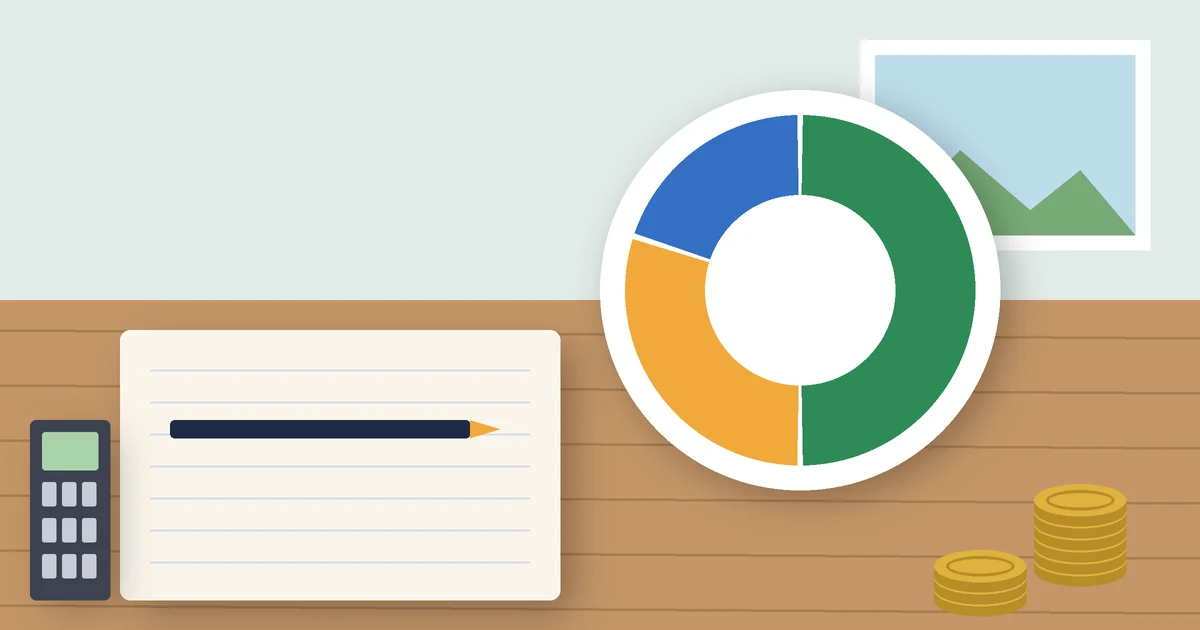
The 50/30/20 budget rule splits your after-tax income into three buckets: 50% for needs, 30% for wants, and 20% for savings and extra debt payments. If you bring home $4,500 a month, that’s $2,250 for needs, $1,350 for wants, and $900 for your future. No tracking every latte. Just three numbers you can check in five minutes.
In some American cities the math gets tight. Below you’ll see exactly how the rule works, what goes in each bucket, real dollar examples, and how to adjust it if you live somewhere rent eats half your paycheck.
Key Takeaways
- Split your take-home pay: 50% needs, 30% wants, 20% savings and extra debt payoff.
- Use after-tax income, but add back paycheck deductions like 401(k) contributions and health insurance premiums.
- Minimum debt payments are needs. Anything above the minimum counts toward your 20%.
- In high-rent states like California or New York, a 60/20/20 split is a realistic starting point.
- Automate the 20% on payday so saving happens before spending.
What Is the 50/30/20 Budget Rule?
The 50/30/20 rule is a percentage-based budget popularized by Elizabeth Warren and her daughter, Amelia Warren Tyagi, in their 2005 book All Your Worth: The Ultimate Lifetime Money Plan. Warren was a Harvard bankruptcy law professor at the time (she later became a U.S. senator from Massachusetts).
The idea is simple. Instead of budgeting dozens of categories, you watch three. If your needs stay at or below half of your income, you have room to enjoy life and still build savings. If needs creep to 65% or 70%, that’s your early warning sign, long before a credit card balance tells you the same thing.
How the 50/30/20 Rule Works, Step by Step
Step 1: Find Your Real After-Tax Income
Start with your net pay, the amount that actually hits your checking account. Then add back anything your employer deducts before you see it, such as 401(k) contributions, health insurance premiums, and HSA contributions. Those are real spending and saving decisions, so they belong in the budget.
Freelancers and gig workers should subtract taxes first. If you drive for Uber or sell on Etsy, set aside roughly 25% to 30% of each payment for federal, state, and self-employment taxes, which you’ll pay through quarterly estimated payments on IRS Form 1040-ES. Budget only what’s left.
Step 2: Sort Every Expense Into a Bucket
Pull your last two or three months of bank and credit card statements. One month can fool you if it included a birthday or a car repair. Tag each charge as a need, a want, or savings and debt payoff.
- Needs (50%): rent or mortgage, utilities, groceries, car payment, gas, insurance, minimum debt payments, childcare, and basic phone service.
- Wants (30%): dining out, streaming services, travel, hobbies, gym memberships, shopping, and upgrades beyond the basic version of a need.
- Savings and debt (20%): emergency fund deposits, retirement contributions, brokerage investing, and payments above the minimum on any debt.
Step 3: Compare Your Numbers and Adjust
Add up each bucket and divide by your after-tax income. Most people find their needs land somewhere between 55% and 70% the first time they do this. That’s normal. The goal is to see the gap, then close it over a few months by trimming wants or lowering a fixed cost like insurance or a phone plan.
Needs vs. Wants: Where Most People Get Stuck
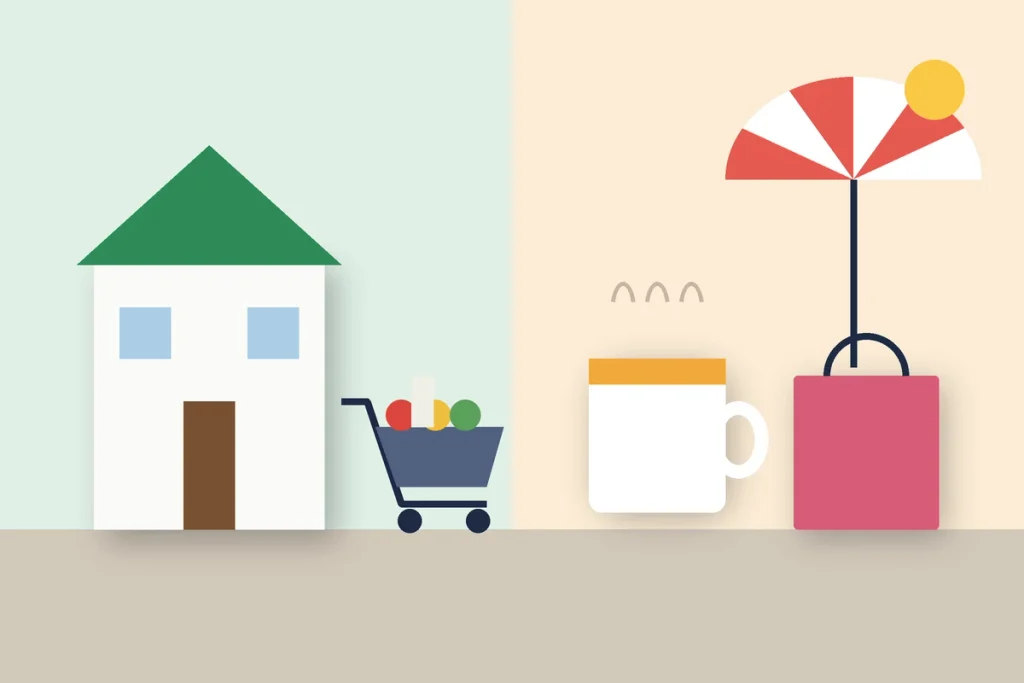
The hardest part of the 50/30/20 budget isn’t the math. It’s being honest about what counts as a need. Here’s a quick guide to the gray areas.
| Expense | Bucket | Why |
|---|---|---|
| Rent or mortgage | Need | Housing is required, though a pricier place than necessary is partly a want. |
| Groceries | Need | Basic food is essential. Takeout and DoorDash are wants. |
| Car payment and insurance | Need | Required for most U.S. commuters, and auto insurance is mandatory in nearly every state. |
| Unlimited premium phone plan | Split | A basic plan is a need. The premium upgrade is a want. |
| Netflix, Spotify, Disney+ | Want | Nice to have, easy to pause. |
| Minimum credit card payment | Need | Skipping it triggers fees and credit damage. |
| Extra credit card payment | Savings/debt | Paying down debt faster improves your net worth. |
| 401(k) contribution | Savings/debt | Retirement savings, even if it comes out pre-tax. |
A good test: if you stopped paying it tomorrow, would something bad happen to your housing, health, job, or credit? If yes, it’s a need. If you’d just be bored or annoyed, it’s a want.
50/30/20 Budget Examples at Three Income Levels
Here’s how the split looks at different monthly take-home amounts. These are round numbers to show the math, not salary-to-paycheck conversions, since your take-home depends on your state, filing status, and benefits.
| Monthly take-home pay | Needs (50%) | Wants (30%) | Savings and debt (20%) |
|---|---|---|---|
| $3,000 | $1,500 | $900 | $600 |
| $4,500 | $2,250 | $1,350 | $900 |
| $7,000 | $3,500 | $2,100 | $1,400 |
Look at the first row. A $1,500 needs budget is tough if rent alone is $1,300, which is common in many U.S. metro areas. That’s the rule’s biggest weakness, and we’ll fix it in a minute. At $7,000 a month, on the other hand, 50% for needs is usually comfortable, and the bigger risk is letting wants quietly grow past $2,100.
What Counts Toward the 20% Savings Bucket?
The 20% is where your long-term wealth comes from, so it pays to be deliberate about the order. Here’s the sequence I’d recommend for most Americans:
- Starter emergency fund: Build $1,000 to $2,000 in a high-yield savings account first.
- Employer 401(k) match: Contribute enough to get the full match. It’s an instant return you won’t find anywhere else.
- High-interest debt: Attack credit cards charging 20% or more before investing beyond the match.
- Full emergency fund: Grow it to three to six months of needs, not total spending.
- More retirement savings: Fund a Roth or traditional IRA, then raise your 401(k) rate.
For 2026, the IRS lets you put up to $24,500 in a 401(k) and $7,500 in an IRA, with extra catch-up room if you’re 50 or older. You can confirm the current figures on the IRS 401(k) contribution limits page. You don’t need to max either one to follow the 50/30/20 rule. Twenty percent of take-home pay is the target.
Why does the emergency fund come so early? The Federal Reserve’s 2025 Survey of Household Economics and Decisionmaking, released in May 2026, found that only 63% of U.S. adults would cover a surprise $400 expense with cash or its equivalent. A small cash cushion keeps one flat tire from landing on a credit card at 24% interest.

Does the 50/30/20 Rule Work in High-Cost States?
Sometimes, but not always. Housing is the deal-breaker. The U.S. Department of Housing and Urban Development considers a household cost-burdened when it pays more than 30% of income on housing, and plenty of renters in cities like Los Angeles, San Francisco, Boston, and New York blow past that line. Once rent takes 35% to 40% of your take-home, keeping all needs at 50% is close to impossible.
Where you live also changes the starting number. Texas and Florida have no state income tax, so a $70,000 salary produces a bigger paycheck there than the same salary in California or New York. Same rule, different dollars.
If you’re in a high-cost area, try one of these variations instead of giving up on the plan:
- 60/20/20: More room for needs, savings stays protected. This is my go-to recommendation for renters in expensive metros.
- 70/20/10: 70% for living costs, 20% for savings, 10% for debt or giving. Works when needs are truly fixed for now.
- 80/20: Save 20% first and spend the rest however you want. Good for people who hate categories.
The one number worth defending is the 20%. Cut wants before you cut savings, and revisit the split every time you get a raise or your rent changes.
Pros and Cons of the 50/30/20 Budget
| Pros | Cons |
|---|---|
| Easy to set up in under an hour | Needs often exceed 50% in high-rent cities |
| Builds in guilt-free fun money | The needs vs. wants line can get fuzzy |
| Works with irregular categories | 20% may be too little for late starters or early retirees |
| Scales up as your income grows | Less helpful for paying off large debt quickly |
My take: the 50/30/20 rule is the best starting budget for most people who’ve never budgeted before. If you’re carrying $15,000 in credit card debt, though, you’ll get out faster with a stricter plan like zero-based budgeting until the balance is gone.

How to Set Up and Track a 50/30/20 Budget
The easiest system I’ve seen uses separate accounts instead of an app. Have your paycheck land in a main checking account for needs, then set up automatic transfers on payday: 20% to a high-yield savings account and 30% to a second checking account for wants. When the wants account runs low, that’s your signal to slow down. No tracking required.
If you prefer an app, budgeting tools like YNAB, Monarch Money, and Rocket Money can tag spending by category. Many people switched to these after Intuit shut down Mint in 2024. A simple Google Sheets template with three columns works just as well if you’re willing to update it once a month.
Your Next Step: Run Your Numbers This Week
Grab your last two months of statements, find your real take-home pay, and sort your spending into the three buckets. Don’t aim for perfect percentages on day one. Set up one automatic transfer for savings, even if it’s 10% to start, and raise it by a point or two every few months. Once your budget is running, check out our guide on how to increase your credit score fast to put that extra breathing room to work.
Frequently Asked Questions
Is the 50/30/20 rule based on gross or net income?
The 50/30/20 rule uses net, or after-tax, income. Start with the amount deposited into your bank account, then add back paycheck deductions like 401(k) contributions and health insurance premiums, since those are spending and saving choices. If you’re self-employed, subtract your estimated taxes first and budget only what remains.
Is the 50/30/20 rule realistic in 2026?
For many Americans it’s realistic as a target, but not always on day one. High rent, childcare, and car costs can push needs above 50%, especially in expensive metros. If that’s you, start with a 60/20/20 or 70/20/10 split, protect your savings rate, and work toward the original percentages as income grows.
Does rent count as a need in the 50/30/20 rule?
Yes, rent or a mortgage payment is a need, along with renters or homeowners insurance and basic utilities. But if you pick a much more expensive place than necessary, part of that cost is really a want. A common guideline is keeping housing near 30% of income, which matches HUD’s cost-burden threshold.
Where does credit card debt go in the 50/30/20 budget?
Your minimum credit card payment goes in the 50% needs bucket because missing it causes late fees and credit damage. Any amount you pay above the minimum goes in the 20% savings and debt bucket. If your card charges 20% interest or more, paying it down is usually your best use of that 20%.
What is the 70/20/10 budget rule?
The 70/20/10 rule puts 70% of after-tax income toward living expenses, both needs and wants, 20% toward savings and investing, and 10% toward extra debt payments or charitable giving. It’s a popular alternative to the 50/30/20 rule for people in high-cost areas or anyone whose fixed bills already take more than half their paycheck.
How much should I save on a $50,000 salary using 50/30/20?
A single filer earning $50,000 typically takes home roughly $3,300 to $3,500 a month, depending on the state and benefits. Using the 50/30/20 rule, that means saving or paying down debt with about $660 to $700 a month, or roughly $8,000 to $8,400 a year. Employer 401(k) deductions count toward that total.