If you’re just starting out, index funds are the better home for most of your money. In the index funds vs individual stocks debate, a low-cost S&P 500 or total market index fund gives you hundreds of companies in one purchase, costs as little as $1.50 a year per $10,000 invested, and has beaten most professional stock pickers over time. Individual stocks can still have a place, but only as a small slice you can afford to get wrong.
Below, we break down how each one works, what they cost, how they’re taxed, and a simple split that lets beginners own a few favorite companies without betting their retirement on them.
Key Takeaways
- Index funds spread your money across hundreds or thousands of companies, so one bad stock can’t sink you.
- In 2025, 79% of actively managed large-cap U.S. stock funds trailed the S&P 500, according to S&P Dow Jones Indices.
- The cheapest S&P 500 index funds charge between 0.015% and 0.03% a year.
- Individual stocks offer bigger upside, but they demand research, time, and the nerve to sit through 50% drops.
- A sensible beginner setup: 90% or more in index funds, 10% or less in individual stocks.
What’s the Difference Between Index Funds and Individual Stocks?
A share of stock is a small ownership stake in one company. Buy a share of Costco, and your money rides on Costco alone. If the company thrives, you win. If it stumbles, you feel every bit of it.
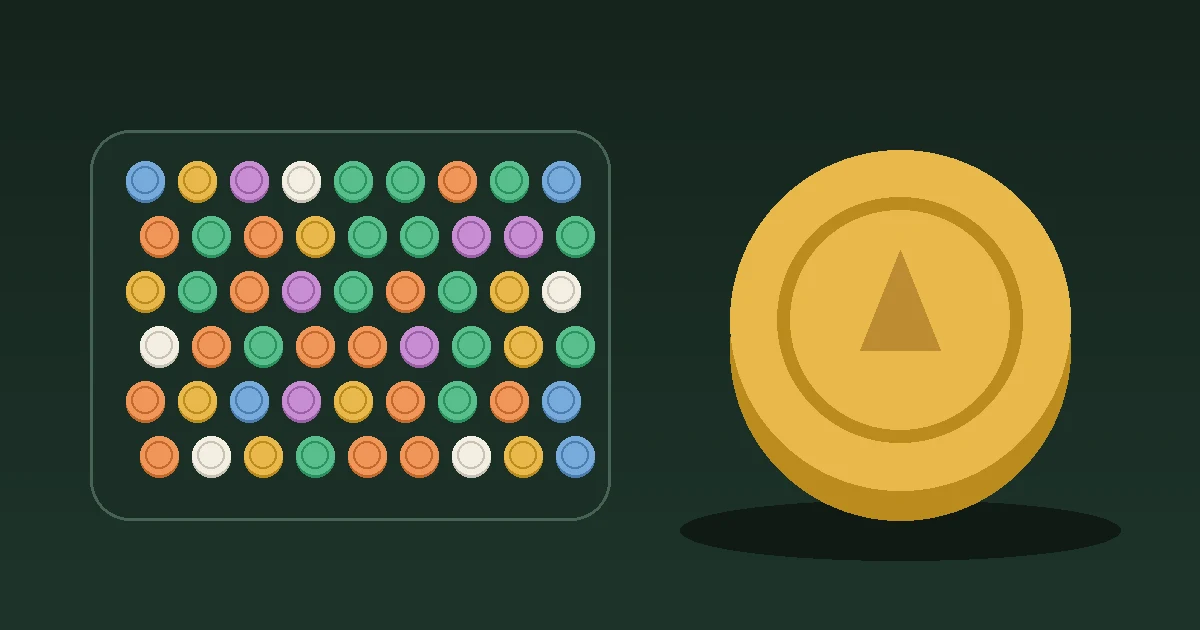
An index fund is a mutual fund or exchange-traded fund (ETF) that holds every stock in a market index, such as the S&P 500. It doesn’t try to pick winners. It simply owns the whole list in the same proportions as the index. The SEC’s Investor Bulletin on index funds explains that this passive approach is what helps keep their costs low.
| Feature | Index Funds | Individual Stocks |
|---|---|---|
| What you own | Hundreds or thousands of companies | One company per stock |
| Diversification | Built in | Only if you buy many stocks |
| Yearly cost | About 0% to 0.03% for top S&P 500 funds | No fund fee, but your time is the cost |
| Time needed | Minutes a year | Hours per company, every quarter |
| Chance of losing most of your money | Very low over long periods | Real (companies do go bankrupt) |
| Best for | Retirement and long-term goals | Learning, conviction bets, a small slice |
Why Index Funds Win for Most Beginners
Diversification comes built in
An S&P 500 index fund holds roughly 500 of the largest U.S. companies, from Apple and Microsoft to JPMorgan Chase and Walmart. If one of them collapses, it’s a small fraction of your money. When a company shrinks and falls out of the index, the fund swaps in its replacement automatically. You never have to make that call.
A total stock market fund goes further and adds thousands of mid-size and small companies. Either way, you’re buying the U.S. economy instead of a guess about one business.
Professionals rarely beat the index
This is the part that surprises most new investors. The SPIVA U.S. Scorecard from S&P Dow Jones Indices found that 79% of actively managed large-cap U.S. funds underperformed the S&P 500 in 2025. That was the fourth-worst showing in the report’s 25-year history.
Those are full-time managers with research teams and data feeds. If most of them can’t keep up with a fund that just buys everything, the odds aren’t better for someone picking stocks on a lunch break.
Fees are close to zero
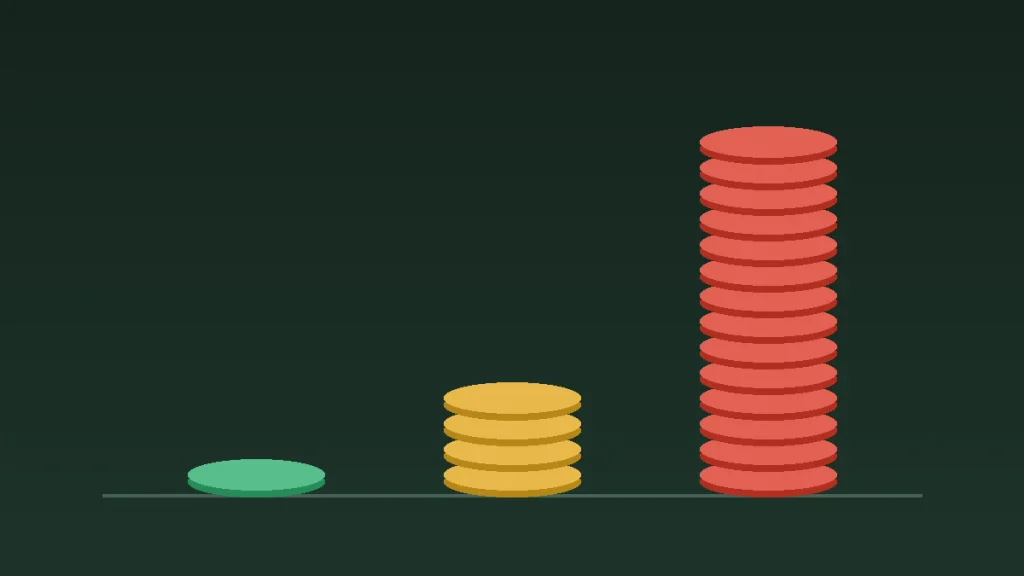
Fidelity’s 500 Index Fund (FXAIX) charges 0.015% a year, Schwab’s S&P 500 Index Fund (SWPPX) charges 0.02%, and Vanguard’s S&P 500 ETF (VOO) charges 0.03%. On $10,000, that’s $1.50 to $3 a year. Actively managed funds commonly charge many times that, and the gap compounds against you for decades.
You don’t have to watch the market
Set up an automatic $200 transfer each month, and the fund does the rest. No earnings calls, no stock alerts, no 2 a.m. panic over a bad headline. For most people, that hands-off quality is worth more than any stock tip.
When Individual Stocks Make Sense
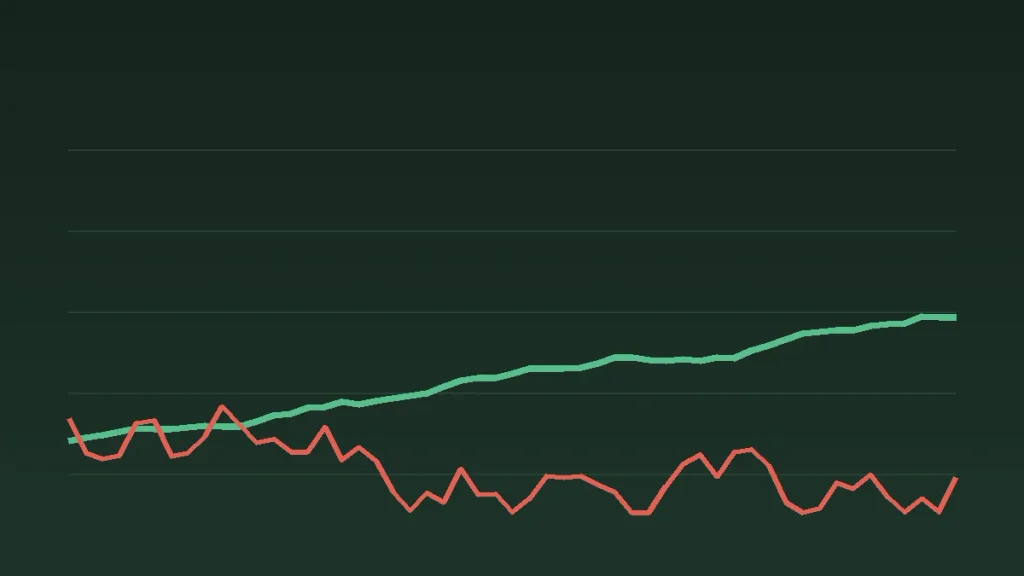
Individual stocks aren’t a bad idea. They’re a different tool. One great company can grow 10 times in value over a decade, something an index fund holding 500 companies can’t do. Picking stocks also teaches you how businesses make money, which makes you a sharper investor overall.
You also get control. You can skip industries you don’t want to own, and you decide exactly when to sell, which can help with tax planning.
The risks are real
Single stocks can drop 50% or more and stay down for years. Some never come back. Enron in 2001 and Lehman Brothers in 2008 were both household names before shareholders were nearly wiped out. Even strong companies can lose half their value in a rough year.
The bigger risk is usually behavior. New investors tend to buy what’s in the news after it’s already soared, then sell in a panic when it drops. An index fund takes that temptation off the table.
Ask yourself these questions first
- Will you read a company’s annual report (the 10-K) before you buy?
- Could you hold through a 40% drop without selling?
- Do you already have an emergency fund and no high-interest credit card debt?
- Is this money you won’t need for at least five years?
If you answered no to any of these, start with index funds and revisit stock picking later.
Index Funds vs Individual Stocks: Costs, Taxes, and Time
Trading costs
Most major U.S. brokers, including Fidelity, Charles Schwab, Vanguard, and Robinhood, charge $0 commissions on online stock and ETF trades. Many also sell fractional shares, so you can start with a few dollars instead of paying hundreds for a single share. Cost to trade is no longer a reason to pick one approach over the other.
Taxes
In a regular (taxable) brokerage account, you owe tax when you sell at a profit. Hold for more than a year, and you pay the federal long-term capital gains rate of 0%, 15%, or 20%. For 2026, single filers with taxable income up to $49,450 pay 0%. Sell within a year, and the gain is taxed like your paycheck, at rates up to 37%.
That’s a hidden cost of active stock picking. People who trade often rack up short-term gains, while index investors who buy and hold rarely sell at all.
State taxes depend on where you live. California, for example, taxes capital gains as regular income, while Texas and Florida have no state income tax. Check your state’s revenue department website for your rate.
The simplest tax move is to invest inside a retirement account. For 2026, you can put up to $7,500 in an IRA ($8,600 if you’re 50 or older), and your investments grow without yearly taxes on gains.
Time
Opening an account and buying an index fund takes about 15 minutes. Researching a single stock properly takes hours, and you’ll want to check in every quarter when the company reports earnings. Multiply that by 10 or 15 stocks, and stock picking becomes a part-time hobby.
The Best Index Funds for Beginners
You don’t need a fancy lineup. One broad, cheap fund is enough to start. Here are the most common choices among U.S. investors.
| Fund | Ticker | Type | Tracks | Expense Ratio |
|---|---|---|---|---|
| Fidelity 500 Index Fund | FXAIX | Mutual fund | S&P 500 | 0.015% |
| Schwab S&P 500 Index Fund | SWPPX | Mutual fund | S&P 500 | 0.02% |
| Vanguard S&P 500 ETF | VOO | ETF | S&P 500 | 0.03% |
| Vanguard Total Stock Market ETF | VTI | ETF | Entire U.S. market | 0.03% |
Expense ratios are as of October 2026. Confirm the current figure on the fund’s official page before you buy.
Our take: if your account is at Fidelity or Schwab, use that firm’s S&P 500 mutual fund, since you can buy exact dollar amounts and set up automatic investing easily. If you might switch brokers someday, an ETF like VOO or VTI moves with you. Between an S&P 500 fund and a total market fund, either is a fine choice. Pick one and stop comparing.
How to Start Investing: A Simple Beginner Plan
- Step 1: Build an emergency fund. Keep three to six months of expenses in a high-yield savings account so you never have to sell investments during a downturn.
- Step 2: Pay off high-interest debt. A credit card charging 20% or more beats any return the stock market reliably gives. Clearing it also helps you raise your credit score.
- Step 3: Grab your 401(k) match. If your employer matches contributions, invest at least enough to get the full match. It’s an instant return, and once it’s in, leave it alone. Our guide on 401(k) loans vs hardship withdrawals shows why pulling money out early costs so much.
- Step 4: Open a Roth IRA or brokerage account. Fidelity, Schwab, and Vanguard all have no account minimums for most investors.
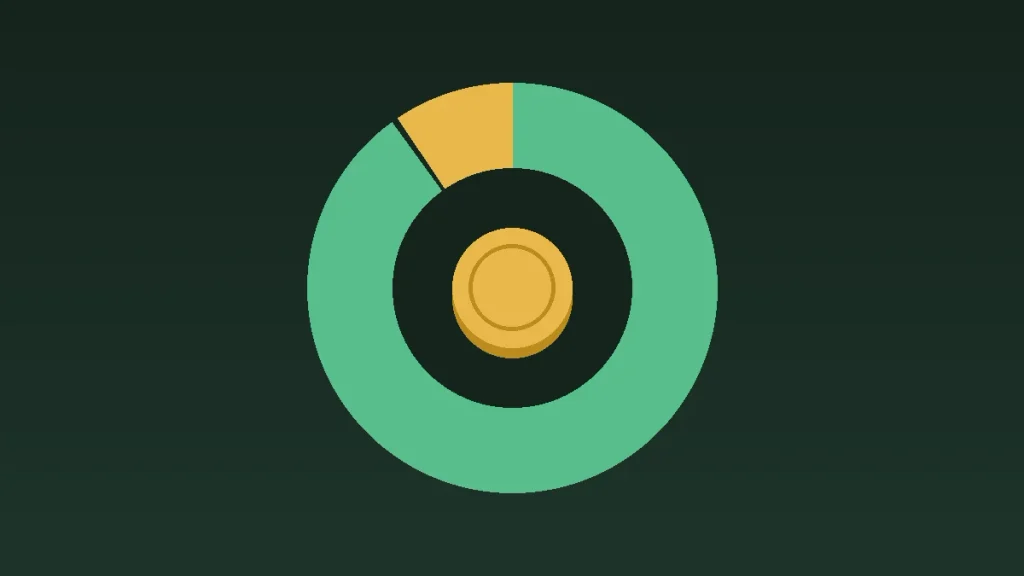
- Step 5: Put 90% or more into one broad index fund. Automate a monthly contribution, even if it’s $50.
- Step 6: Use 10% or less for individual stocks. Cap any single company at about 5% of your total portfolio.
- Step 7: Rebalance once a year. If a hot stock grows past your limit, trim it back.
Before you open an account, look up the broker on FINRA BrokerCheck. Also confirm the firm is a member of SIPC, which protects customer accounts up to $500,000 (including $250,000 in cash) if the brokerage itself fails. SIPC doesn’t cover market losses, so it protects you from a failed firm, not a falling stock.
Frequently Asked Questions
Are index funds better than individual stocks for beginners?
For most beginners, yes. Index funds give you instant diversification across hundreds of companies, charge tiny fees, and have outperformed most professional fund managers over time. Individual stocks can deliver bigger gains, but they carry more risk and need regular research. A good start is mostly index funds with a small stock slice.
How much money do I need to start investing in index funds?
You can start with as little as $1 at many brokers. Fidelity’s and Schwab’s S&P 500 mutual funds have no minimum investment, and most brokers sell fractional ETF shares. What matters more than the starting amount is consistency, so set up an automatic monthly contribution you can keep up, even if it’s only $25.
Can you lose money in an index fund?
Yes. An index fund rises and falls with the market it tracks, so a 30% market drop means your fund drops about 30% too. The difference is recovery. A broad U.S. index has historically recovered from every crash given enough time, while a single company can fail completely. That’s why index funds suit money you won’t touch for years.
Is VOO or FXAIX better for beginners?
Both track the S&P 500 and perform almost identically. FXAIX is a Fidelity mutual fund charging 0.015% with no minimum, which makes automatic dollar investing easy. VOO is a Vanguard ETF charging 0.03% that you can buy at nearly any broker. Choose FXAIX if you bank with Fidelity, and VOO if you want flexibility.
How many individual stocks should a beginner own?
If you buy individual stocks, start with just a few companies you understand, and keep them to 10% or less of your total portfolio. Spread that money across different industries so one bad sector doesn’t hurt you. Owning 15 to 20 stocks adds diversification, but by then a simple index fund often does the job better.
Do index funds pay dividends?
Yes. Stock index funds collect dividends from the companies they hold and pass them to you, usually every quarter. You can take them as cash or set them to reinvest automatically, which buys more shares and speeds up compounding. In a taxable account, those dividends are taxable in the year you receive them, even if reinvested.
Your Next Step: Make Your First Investment This Week
You don’t need to master stock picking to build wealth. Open a Roth IRA or brokerage account, buy one low-cost S&P 500 or total market index fund, and set up an automatic monthly transfer. That single move puts you ahead of most people who are still waiting for the perfect time.
Once that habit is running, feel free to set aside a small slice for a company you believe in. Keep the core boring, keep the fun money small, and give it time.
This article is for educational purposes only and isn’t personalized financial advice. Consider speaking with a licensed financial professional about your situation.